Simmons is admitting to the credit of the Messrs Elijah and Simon House the payments made for several articles on the orders of Captain Steele and Lieutenant Livingston, Commandants of Fort Trumbull. The total amount for the items, which are for general items like saws, planes, and other tools, amounts to $36.20.
Simmons received with Colfax's letter of October 24th along with accounts and vouchers in the amount of $48660.59. Simmons asks that Colfax bring his attention back to the objections to the accounts that the Accounting Office has made note of. Simmons has been unable to make a final settlement on Colfax's accounts, and this has gone on long enough for Simmons' taste.
Certification of payment; $48.84 to Lieutenant Jacob Wilson, 3d Regiment of Infantry, for payments made to hired musicians and for traveling expenses while on recruiting service.
Certification of payment; $70 to Jesse Bowles, Richmond Virginia for rent of house, occupied as a hospital by the sick of Captain Eddins Company at Richmond.
Certification of payment; $90.80 to Way and Groff, Printers, for printing for the office of the Paymaster General, blank muster and pay rolls, recruiting forms, and paper.
General orders issued by T. H. Cushing from Head Quarters in Washington. Sergeant David mead of Captain Freeman's company of Artillerists and Engineers is transferred to infantry and will join the band. John Grants and William Hard of Elliot's company of Artillists and Engineers and William Thompson of Bishop's company are transferred to Captain Freeman's company and must be mustered as such from November 1. Captain Freeman should embark with his company as soon as possible to Fort Norfolk, where he will report to Major Ford and receive further orders. The Adjutant Quartermaster will furnish all necessary transport.
Directs issue of carpenter's tools for the use of artificers employed at Schuylkill laboratory. Two notes are appended -- one, presumably from Hodgdon, states that the purveyor has been directed to purchase the above supplies, and one presumably from Harris confirms that the items were delivered on November 25.
Enclosed is a return of clothing issued to Major Buel for the recruiting service the delivery of which should be sanctioned by Hodgdon. Williams has received no return from Buel respecting other articles he may need. The remainder of the clothing will be sent down the river to Hartford and then on to Colonel Stevens at New York.
Respecting the account of Lt. Mosely, the Secretary of War has communicated his opinion that a deranged officer employed in the public service is entitled to reasonable compensation.
Williams reports that the results of the inquiry, or trial, are not known since the business of the court is not yet complete. He is sending the clothing forward to Colonel Stevens at New York. The small quantity of clothing from Oxford he had on hand will also be packed up and sent.
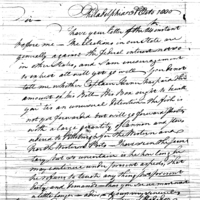
States elections in Pennsylvania are "generally against the Federal interest." Requests to be informed on whether or not Capt. Turner has paid his bill, discussed the unusual detention of his box. Notification that cannons, fish, and other supplies will be sent to Pittsburgh shortly. Sec of War uncertain of the longevity of his post, will only deal with present duties and demands.
Wilson's accounts as Paymaster to the Recruits under Major Jonathan Cass differ from his statements and thus he is owed $48 which has been aid to Lieutenant Samuel Lane.
Simmons received Gilmor's letter of October 29th with accompanying accounts regarding expenditures for the fortifications of Baltimore. The Secretary of War issued a warrant of $2000 which will be transmitted to Gilmor by the Secretary of the Treasury.
Certification of payment; $225 to Major Thomas H. Cushing, 1st United States Regiment for traveling expenses for himself and servant from Fort Adams, on the Mississippi, to City of Washington, ordered there by Brigadier General Wilkinson.
Truman Mosely has submitted a claim for $252.14, and Simmons requests that Dexter examine Mosely's accounts and determine what part of that amount is to be awarded to him.
McHenry discusses the expediency of pushing Aaron Burr over Thomas Jefferson in the House of Representatives. A crisis appeared in 1800 when Burr and Jefferson tied in the electoral college, even though Jefferson was the intended presidential candidate.