

News
Document Spotlight-Business with the Alleghany Indians
Transcriber Dawoogie brings us a behind-the-scenes look at American-Indian relations. Secretary of War Henry Knox instructs Lieutenant Jeffers concerning relations with the Alleghany Indians.
In a fascinating look at early American military policy, Knox outlines a set of policies designed to give tangible aid to the Indians. Knox also makes it clear that the American military is willing to support the Alleghanies with ammunition and other supplies. Jeffers is also to provide soldiers to help Alleghany scouts patrol, along with general guidelines as to geography.
Read moreSteam-powered boats and the War Department
In 1787 John Fitch constructed the first steam-powered boat in America. Fitch was not the original inventor of the steamboat – that honor goes to the Scottish inventor James Watt – but Fitch successfully brought the technology to the United States.
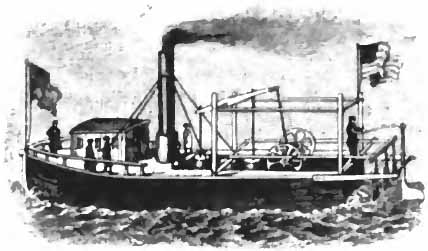
In a letter to Washington’s Cabinet on June 22, 1790, Fitch applied for a patent for “applying steam to the purposes of propelling Vessels thro’ the water.” Fitch predicted that the new technology would have “great immediate utility” and would have “important advantages… not only to America, but to the World at large.”
Read moreDocument Spotlight-“Murder of Some Friendly Indians”
Transcriber Dawoogie recently came across a letter from from Henry Knox to the governor of Pennsylvania detailing the murder of some Indians who had been friendly to the United States. Knox laments the murder, and ponders the potential consequences: in the first place, Knox writes, recent progress in peace overtures will be lost. In the second place, it is liable to spark a war between the Indians and Americans.
Further, Knox vows to put the resources of the government to work to find the murderer. Interestingly, though, he reminds the governor that prosecution of the murderer is a state, not a federal, issue.
Read moreCommunity Transcription-Eight Months On
Another month, another 42 users…
It’s been eight months now since we opened the War Department archives to community transcription. Way back in March we offered the Scripto transcription tool, and ever since then we have been steadily adding finished documents to our archive. What started with just a dozen or so volunteers has grown into an active, vigorous community of volunteer transcribers.
We offer here another snapshot at our transcription activity.
Read moreDocument Spotlight-Horses and Saddles and Wagons, Oh My!
Lest the casual reader think the War Department Papers are all concerned with boring military matters, we offer a break from discussions of appointments and maneuvers.
Transcriber Lsmith recently posted a document detailing Samuel Hodgdene’s equine concerns. In the first place, Hodgdene wants to make sure all the cavalry horses are outfitted identically. Thus, he insists on reserving a shipment of saddles for the “uniformity of the Cavalry which is meant to be a compleat Corps.”
Read moreBefore Clara Barton’s Vision
The mission of the American Red Cross is to provide humanitarian relief to those in need of assistance and was formally adopted at the Treaty of Geneva in 1864. Prior to the formation of the Red Cross, Clara Barton provided relief to wounded soldiers as a field nurse and was among many women assisting the U.S. military, during and well before the Civil War.
A document written by Frederick Frye to William Simmons in 1797 shows that women were indeed on the payroll of the U.S. government, albeit an informal employment. Frye noted that he brought on a soldiers wife to serve as a nurse at Governor’s Island in the newly commissioned hospital and that she was allotted pay for her services. In 1795 Simmons approved the pay of Sarah Brooks for her service as a nurse in Carlisle, PA. As far back as 1784 War Department documents contain evidence of female nurses staffing hospitals.
Read moreDocument Spotlight-Mr. Fox’s Appointment
Transcriber Sharpjohng recently found a document detailing Josiah Fox’s appointment as a clerk in the War Department. The letter specifies Fox’s salary (a whopping $5 per year); also included is the text of the oath Fox was required to take. In the oath, taken 17 July 1794, Fox affirms that he will support the U.S. Constitution and will execute the office to the best of his abilities.
Read the original document here: http://wardepartmentpapers.org/scripto/mediawiki/index.php?title=.MTExMzc.MTc5MjM&rcid=2465.
Read moreGeneral Statement of Indian Policy
As President George Washington’s Secretary of War, Henry Knox was responsible for Indian affairs. During the first year of Washington’s presidency, Know wrote a letter to the president in which he described in some detail his views on Indian policy. Written in January 1790, this document is the closest thing we have to a comprensive statement of the early Indian policies of Knox and Washington.
Knox discusses the cost of war and peace with the Indian Nations along the Southwestern frontier. He speculates on the size of an army necessary to engage hostile Indians along this vast expanse of territory. He concludes that peace and diplomacy are much less costly than war: “A comparative view of the expenses of a hostile or conciliatory system towards the Indians, will evince the infinite economy of the latter over the former.” (In an earlier letter, Knox had made the same claim, only in more specific terms: “…the expence of managing the said Indians and attaching them to the United States for the ensuing period of fifty years may on average cost 15,000 dollars annually. A system of coercion and oppression for the same period…would probably amount to a much greater sum of money.”)
Read moreHarpers Ferry and “The Habitual Laziness of the Poor in this Country”
It is fairly well known that ever since the days of the French and Indian War, George Washington had been an aggressive land speculator up and down the Shenandoah Valley and around the Potomac River. Washington believed passionately in the economic potential of the Potomac River, and was president of a joint stock venture called the “Potowmack Company.” Behind all this entrepreneurial spirit was a belief that commerce and industry, taking place alongside rivers like the Potomac, would unify the new nation. Indeed, Washington envisioned a symbol of this unity a few miles down river in what would become the City of Washington.
Read moreCommunity Transcription-Seven Months On
Another month, another 50 users…
It’s been seven months now since we opened the War Department archives to community transcription. Way back in March we offered the Scripto transcription tool, and ever since then we have been steadily adding finished documents to our archive. What started with just a dozen or so volunteers has grown into an active, vigorous community of volunteer transcribers.
We offer here another snapshot at our transcription activity.
Read moreDocument Spotlight-Death of a Judge
Recently, it seems that several of our recent spotlights have involved finances or logistics. For a fresh subject, we turn today to a different set of interests. Transcriber AprilleMcKay recently transcribed a document detailing a W Sargeant’s opinion on filling a vacant judgeship.
Mr. Sargeant expresses his opinions concerning several candidates: General Putnam has a military background and is well-connected. Mr. Putnam is very intelligent and a very respectable man. Sargeant, though, makes it clear that although heprefers Putnam, he has no influence and means no impropriety.
Read moreThe Greaton Women and the War Department
Here and there between the lists of supplies and records of accounts paid, you find the story of a family or a woman whose life was tied to the Department. Two such women were members of the Greaton family of Massachusetts, both of whom wrote to the War Department in the 1790s.
The first lady to write was Sarah Greaton, wife of General John Greaton. She wrote to Secretary of War Henry Knoxin in July 1791 ( this letter does not survive) and again in March 1792, trying to secure money due her husband for his service in the Revolutionary War. From the March letter it seems that previous attempts to receive the funds had fallen afoul of one problem after another. According to the Daughters of the American Revolution and other genealogical records, General Greaton died in December 1783. Between his death and writing to Knox, Sarah Greaton worked to support herself and her children. It is not clear what finally moved her to write to Knox over seven years after being widowed, but she did.
Read moreDocument Spotlight-Military Supply List
Volunteer Cpartrid recently transcribed a document that illustrates the logistical and financial arrangements military officers were constantly making. A quick glance at this list of supplies and expenses shows just how much money it cost a couple units to operate on the frontier for a year.
2,000 dollars is a lot of money for fuel, and amazingly, transporting 20 loads or ordinance and other supplies cost a whopping 7,500 dollars. Add in other expenses–barracks, saddles and tools, and gifts for Indian tribes–and you end up with nearly 30,000 dollars.
Read moreDocument Spotlight-More Pension Inquiries
If you read even a few War Department papers it is easy to see just how much time and energy the department spent verifying records for pensions, death benefits, and other financial matters. One can almost see clerks searching muster rolls and other documents to determine eligibility.
Transcriber Karenwalters recently came across a letter asking for such an inquiry. The original request sought to determine the status of a Captain Peter Withington on 11 May 1777. The writer wonders whether Withington was mustered dead on that day, or whether he had been discharged. Perhaps it meant the difference between a survivor’s benefit and a pension for Withington’s family.
Read moreThe Jeffersonian Revolution, and its Implications for the War Department and Federalist Party
The ascension of the Democratic-Republicans to Congress in 1801, along with the election of Thomas Jefferson in the same year, represented a clear break from Federalist policy in the latter half of the 1790s. Led by Alexander Hamilton, the Federalist Party possessed control of both houses of Congress from 1797 to 1800 (the fifth and sixth Congresses), and enjoyed control of the executive branch. The Federalists generally supported a stronger, more centralized national government, with protective tariffs, a National Bank, and – most pertinent to the War Department Papers collection – a strong national military.
Read moreDocument Spotlight-Bad News for Captain Bliss
Parkehyde, one of our volunteer transcribers recently finished a document that highlights a frequent situation in the early War Department. A Captain Bliss had evidently asked for an accounting of money due him. After a check of the relevant paperwork, however, the Commissioner of Army Accounts determined that Captain Bliss was not owed any funds. Furthermore, the letter advises Bliss that it could be a waste of his time to pursue the matter further, although, even in the eighteenth century, he was free to speak with counsel. It is at the same time a personal story, a bureaucratic story, and a military one.
Read moreCommunity Transcription-Six Months On
Has it really been that long?
It’s been six months now since we opened the War Department archives to community transcription. Way back in March we offered the Scripto transcription tool, and ever since then we have been steadily adding finished documents to our archive. What started with just a dozen or so volunteers has grown into an active, vigorous community of volunteer transcribers.
We thought you might like to know just how much activity these pages have seen.
Read moreHelp Needed-Transcribe this document
While transcribers can select a document to work on from a list of nominated documents, we thought it might be a good idea to highlight a document every now and then that needs to be transcribed.
This week’s featured letter, written in General Henry Knox’s hand, concerns an issue with muskets and musket parts.
You may find the document here http://wardepartmentpapers.org/scripto/?documentId=5057.
Please request an account (http://wardepartmentpapers.org/scripto/register.php), sign in, and transcribe this document for us. Or choose a different one here (http://wardepartmentpapers.org/nominations.php). You will be contributing to the historical record by adding to our archive.
Read moreUncle Henry Wants You
In a directive of early December 1789, Secretary of War Henry Knox informs Captains Burbeck and Savage that each of them is directed to recruit the requisite number of men to complete their two companies. He lists the qualities he requires of new recruits and sets the deadline for the completion of the recruitment effort. He wants “men of the best qualifications for soldiers” and specifies that their companies must be completed by February 1st; i.e., the two captains have only two winter months to recruit the men necessary to fill the quota of forty men for each company.
Read moreDocument Spotlight: No Sleeping in the Yard
Recently, transcriber Sharpjohng came across an interesting passage in a document. In order to maintain order at the Gosport, Virginia, Naval Yard, it became necessary to proscribe a list of regulations. Many of them are relatively normal rules pertaining to naval or construction sites: protect the wooden ship materials from the weather; keep construction clutter to a minimum. One rule, though, strikes the twenty-first century reader as a little curious:
Read moreGhost Author of Documents
In browsing or searching the files of the Papers of the War Department digital archive, you may come across the authors, “Elijah and Simon House“. Investigating further, you’ll learn that they were contractors from Hebron, CT. That is where their biographical information ends within our database. As editors, we asked ourselves many times over who these two men were and why their names appeared on so many of our documents.
Read moreDocument Spotlight-A Peace Proclamation
Transcriber Cpartrid recently ran across and transcribed a document related to treaty between the young United States and the Creek nation. As President of the United States, George Washington was authorized to negotiate treaties with other nations; this treaty, ratified by the Senate as the constitution requires, recognizes the sovereignty of the Creeks, and promises peace and friendship.
With ratified treaty in hand, Washington here asks his military officers to respect the terms of the treaty.
Read moreThe USS Crescent
Today most of us would react in horror to the idea of arming our adversaries with an American-built warship to bribe them from attacking our merchant vessels. But before the United States became a maritime power, many considered it cheaper to pay tribute to North African pirates than to build a navy from scratch. Thus, in 1796, while the original six frigates were under construction, word arrived of a diplomatic settlement with Algiers. Terms included payment of a lump sum of half a million dollars as ransom for American prisoners, an annual tribute of over $20,000, and construction of four ships, one of which would become the frigate “Crescent. ”
Read moreDocument Spotlight-Orders for Captain Preston
Newly-commissioned Captain William Preston received this letter from Henry Knox in August of 1792. The letter contains Preston’s orders and instructions to march for Point Pleasant.
Transcribed by volunteer Wvancestors, the orders give very specific instructions for Preston’s conduct–keep a journal, refrain from antagonizing residents and inhabitants, maintain strict accounting of expenses and purchases. In addition, Preston is cautioned to respect the local authorities, to pay close attention to the health of his soldiers, and to camp with his soldiers each night. It is a fascinating look at life from the perspective of a junior military officer in the late eighteenth century.
Document Spotlight-Indian Raid on the Ohio River
Recently, transcriber Brendawarneka transcribed a document in which Charles Johnston recounts an attack from hostile Native Americans.
Johnston gave a military deposition detailing the raid by some 54 Cherokees and Shawnees. In the attack, two people–a man and a woman–were killed and many more taken captive. The attackers also confiscated property.
Although short–only a dozen lines or so–the document provides a fascinating (and terrifying) look at life on the frontier in 1790.
Read more