

Letter to the President of the United States
Document 1800Largely illegible draft of a letter to the President of the United States. Relates to the running of the War Department, with specific mention of the duties and powers of the Accountant of the War Department.




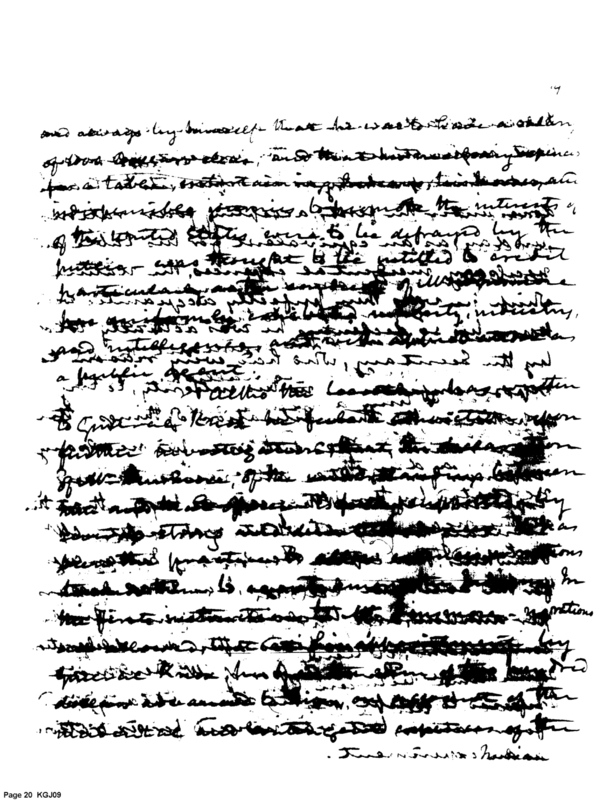
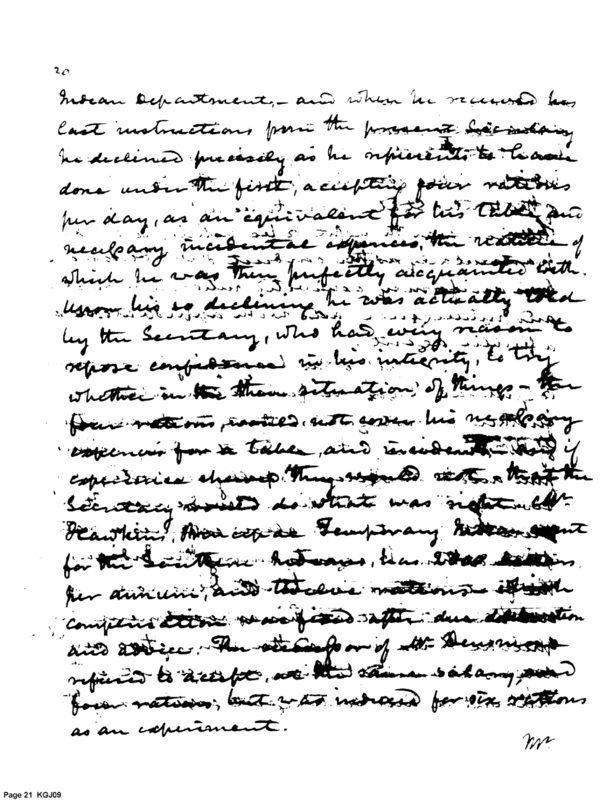
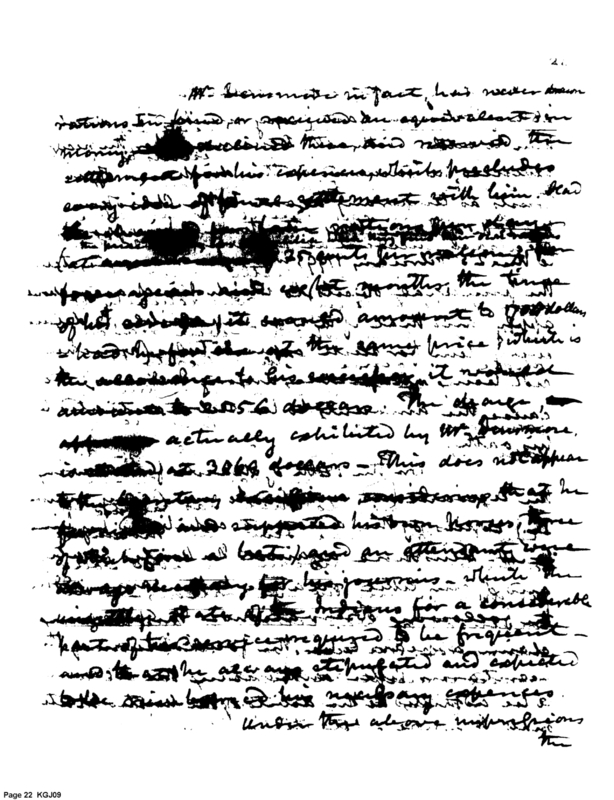
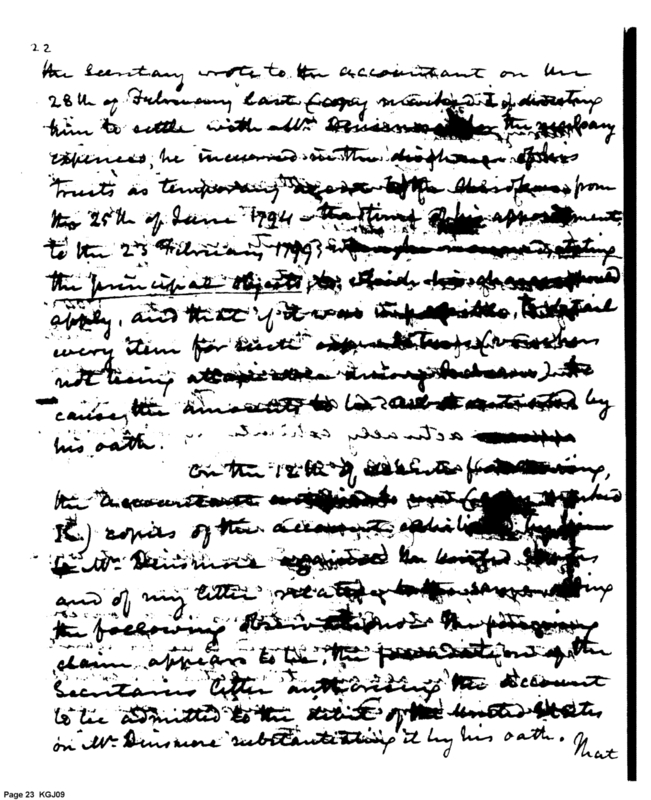

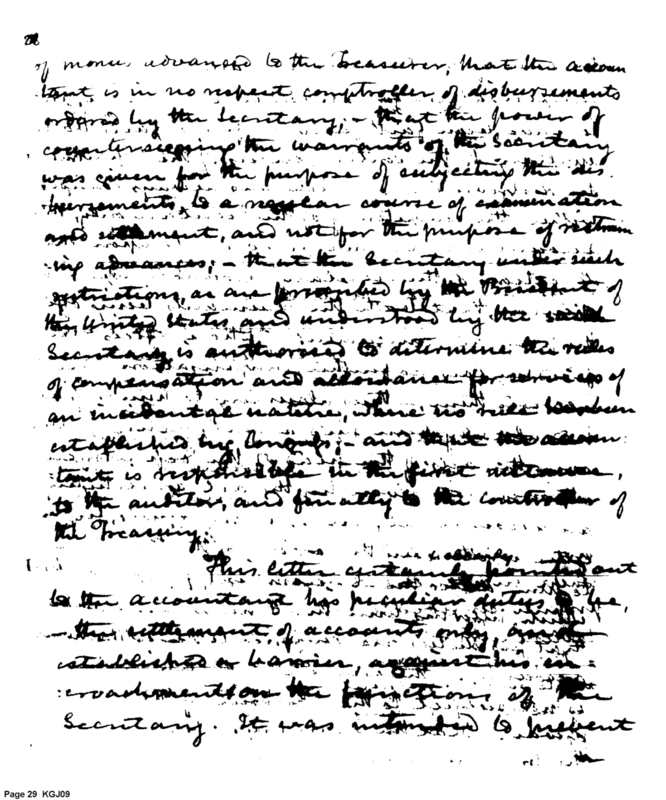


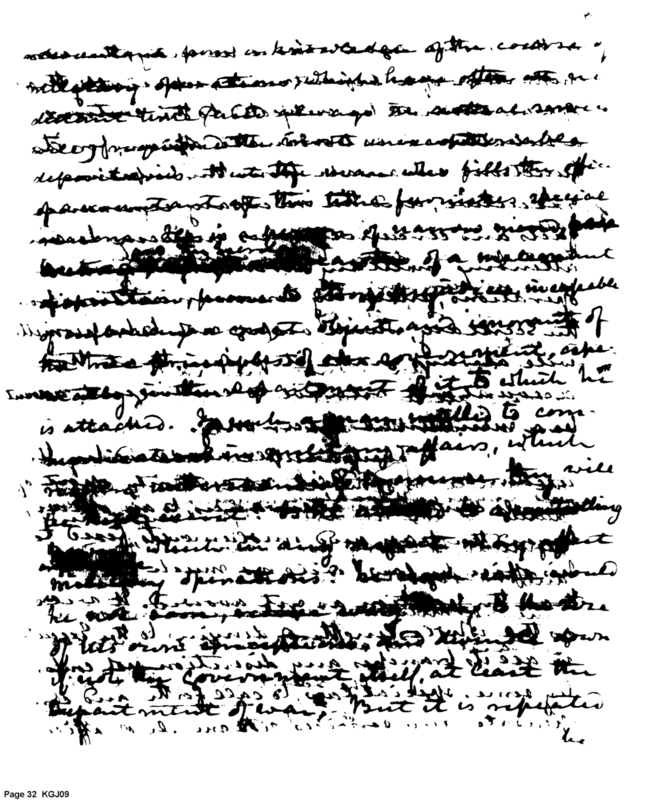
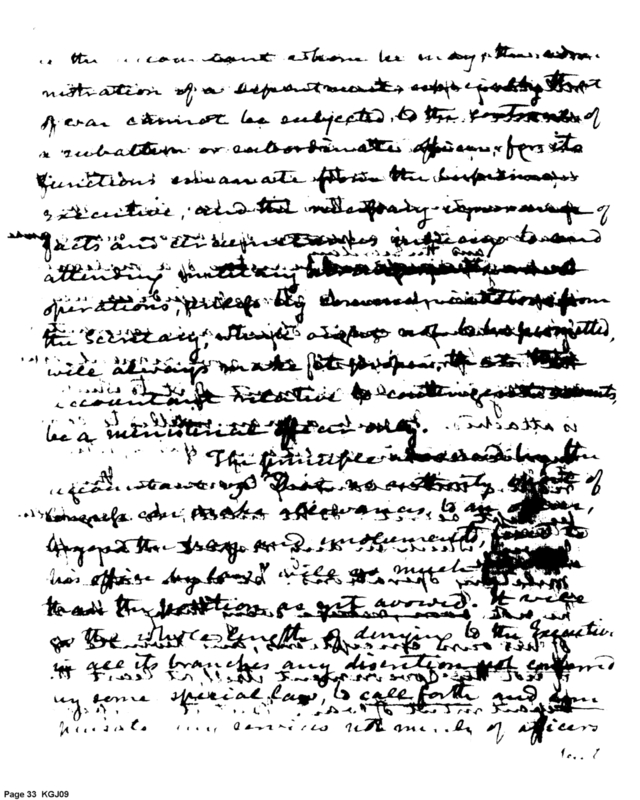
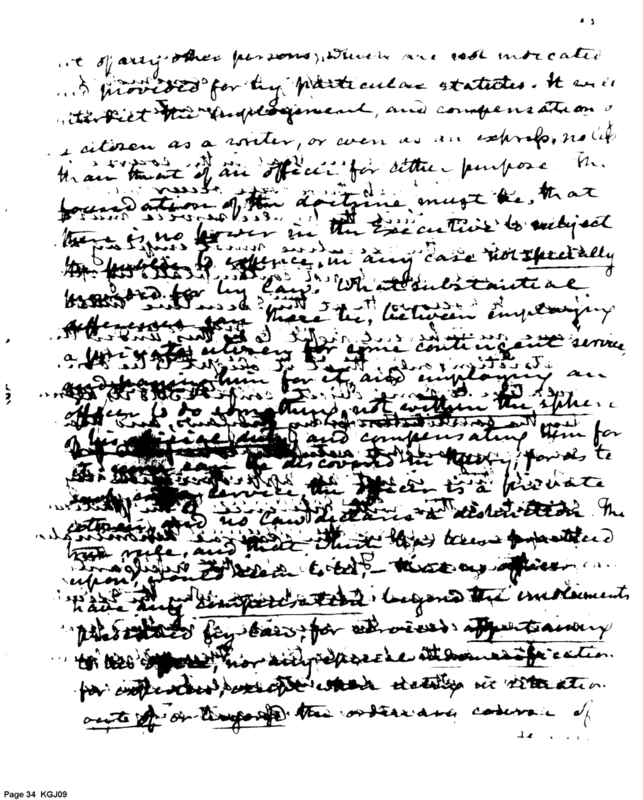

No human transcription currently available for this document.
This transcription was generated by machine using Anthropic's Claude Code (model sonnet 4.6). It may contain errors or inaccuracies. Please verify against the document image. Learn more about our generative AI methodology.
Now I have all the images. Let me compile the full transcription.
[Endorsement]
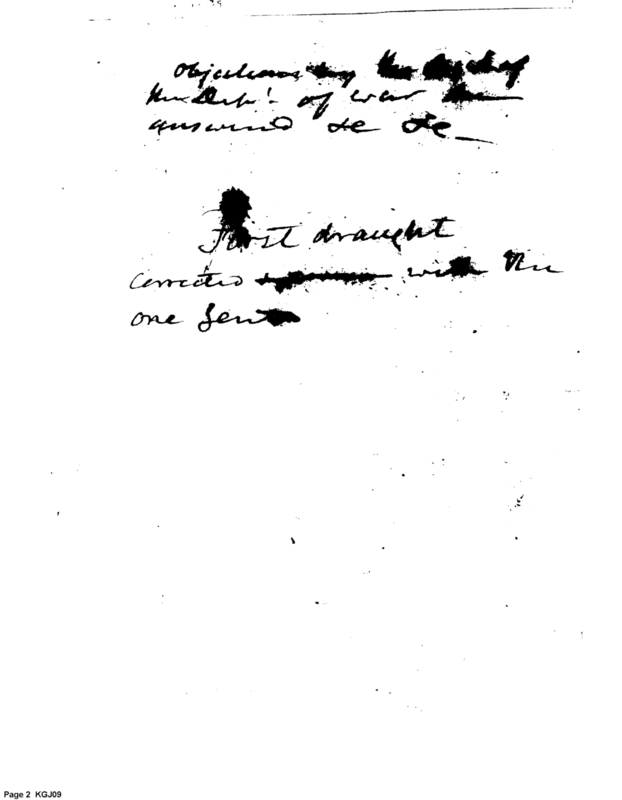
Objections [by?] the [undecipherable] Secretary of war [undecipherable]
answered [to?] [the?] —
First draught
corrected [undecipherable] with the
one sent
---
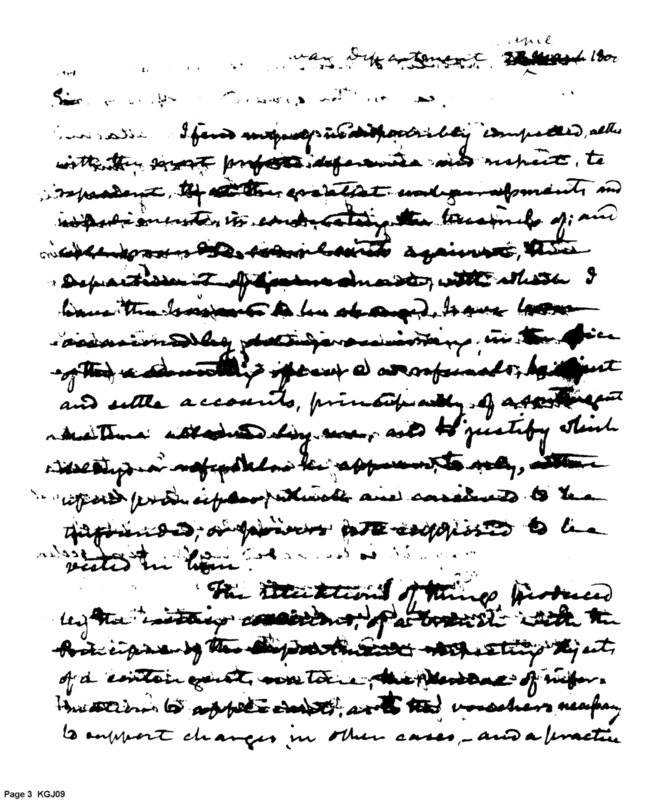
War Department [April?] [undecipherable] 1801
Sir
[undecipherable] I find myself indispensibly compelled, altho with the most profound deference and respect, to represent, the extreme partialities and encroachments and insubordination in conducting the [business?] of, and incidents concerning [undecipherable] complainants against, the Department of [War?] with which I have the honor to be charged, to have been [undecipherable] arising, in the office of the [Accountant?] [undecipherable] of [undecipherable] and to settle accounts, principally of [undecipherable] [undecipherable] as to justify [their?] [undecipherable] [undecipherable] to rely, [undecipherable] [undecipherable] principals and [contents?] to the [undecipherable] Department, or claims [undecipherable] to be [undecipherable] to be [undecipherable]
vested in him.
The [undecipherable] of things produced by the [military?] [condition?] of accounts with the principals of the Departments [requiring?] [objects?] of a certain nature [containing?] the [portions?] of [under?]-[instructions?] to apply claims, and the vouchers necessary to support changes in other cases, and a practice
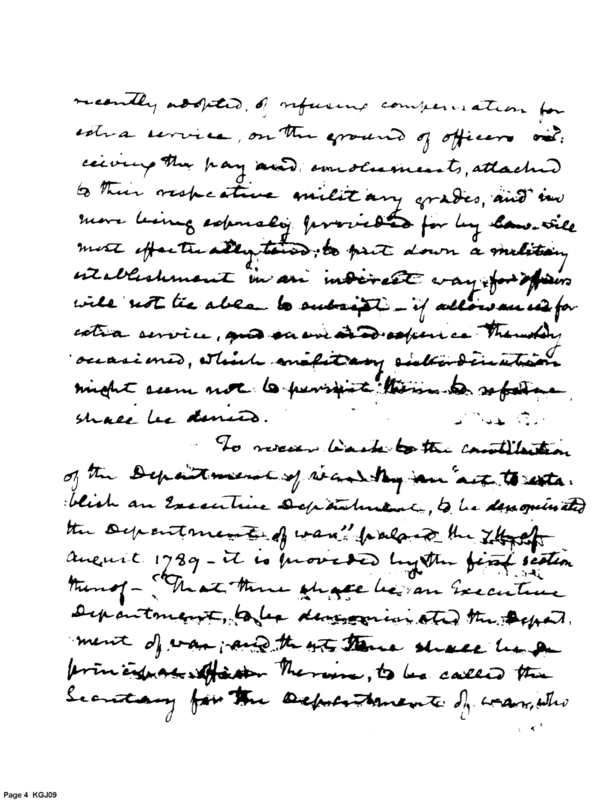
recently adopted, of refusing compensation for extra service, on the ground of officers receiving the pay and emoluments, attached to their respective military grades, and in more being separately provided for by law — will most effectually tend, to put down a military establishment in an indirect way for officers will not be able to subsist — if allowances for extra service, and on occasions [undecipherable] thereby [undecipherable], which military subordination might seem not to permit [them?] to refuse, shall be denied.
To revert back to the constitution of the Department of war — by an act to establish an Executive Department, to be denominated the Department of war, passed the [17th?] of August 1789 — it is provided by the first section thereof — 'That there shall be an Executive Department, to be denominated the Department of war; and the at there shall be a principal officer therein, to be called the Secretary for the Departments of war, who
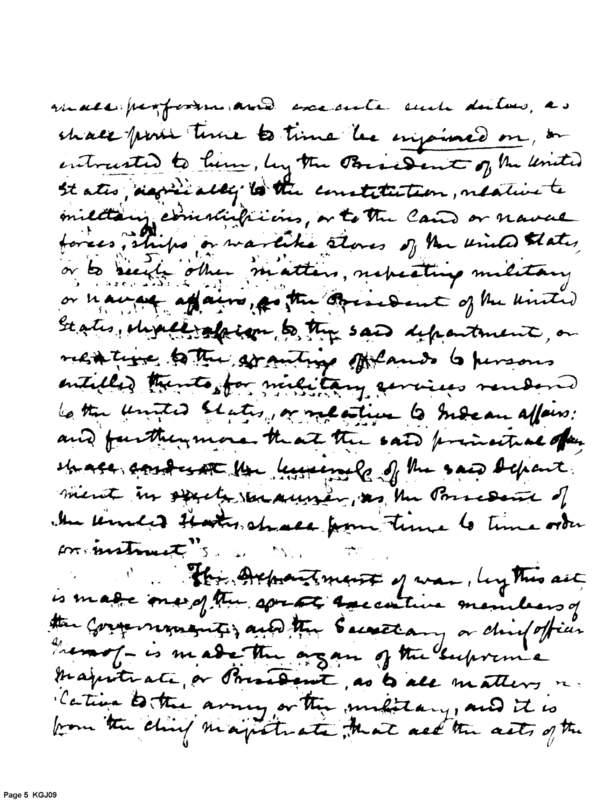
shall perform and execute such duties, as shall from time to time be enjoined on, or entrusted to him, by the President of the United States, agreeable to the constitution, relative to military commissions, or to the land or naval forces, ships or warlike stores of the United States, or to such other matters, respecting military or naval affairs, as the President of the United States, shall assign to the said department, or relative to the granting of lands to persons entitled thereto, for military services rendered to the United States, or relative to Indian Affairs: and furthermore that the said principal officer shall conduct the business of the said Department in such manner, as the President of the United States shall from time to time order or instruct.'
The Department of war, by this act, is made one of the great executive members of the Government; and the Secretary or chief officer thereof — is made the organ of the Supreme Magistrate, or President, as to all matters relative to the army or the military, and it is from the chief Magistrate, that all the acts of the
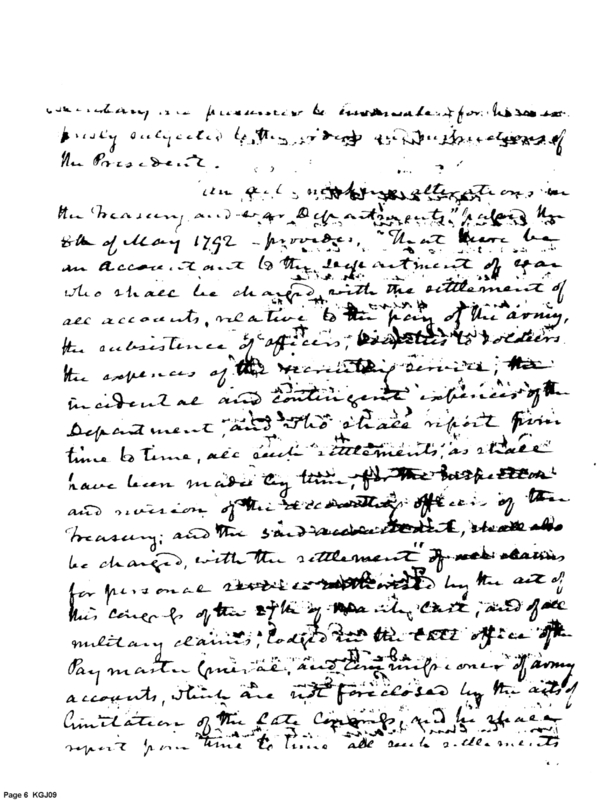
[undecipherable] are [presumed?] to be [emanated?] for his so-[undecipherable] only subject to the orders and instructions of the President.
[An act, no?]thing[undecipherable] alterations in the Treasury and War Departments, passed the [undecipherable] of May 1792 — provides, 'That there be an Accountant to the Department of war who shall be charged with the settlement of all accounts, relative to the pay of the army, the subsistence of officers, [undecipherable] to soldiers, the expenses of the [recruiting?] service; the incidental and contingent expenses of the Department; and who shall report from time to time, all such settlements, as shall have been made by him, after the inspection and revision of the [accounting?] officers of the Treasury; and the said Accountant, shall also be charged, with the settlement of such claims for personal [service?] created by the act of [undecipherable] of [undecipherable] [Cavalry?], and of all military claims, lodged in the [undecipherable] office of the Paymaster General, and Commissioner of army accounts, which are not foreclosed by the acts of Limitations of the late Congress, and he shall report from time to time all such settlements
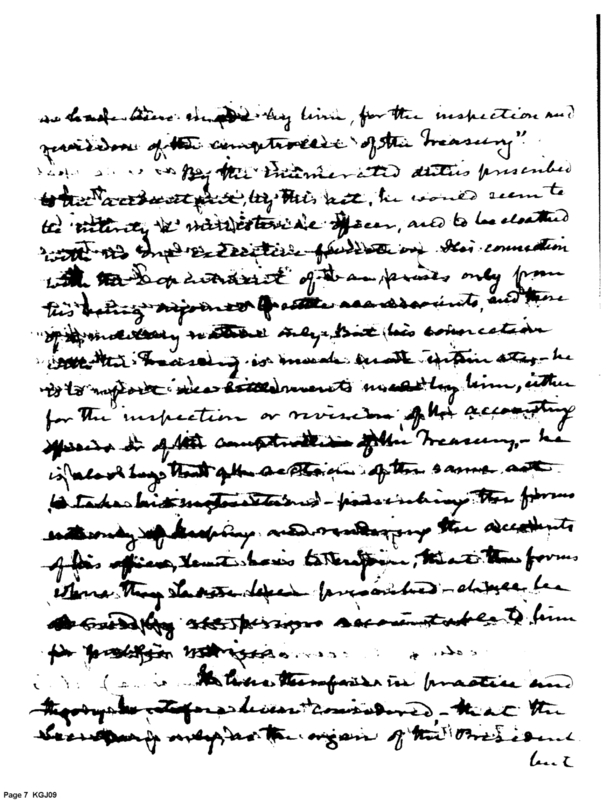
as [those?] [existing?], made by him, for the inspection and [revision?] of the Comptroller of the Treasury.'
[undecipherable] By the enumerated duties prescribed to the Accountant, by this act, he would seem to be entirely a [ministerial?] officer, and to be clothed with no independent [jurisdiction?] in his connection with the Department of war; appears only from his being required to settle accounts, and there [undecipherable] [ministerial?] only; but his connection with the Treasury is made quite [determinate?] — he is to report his settlements made by him, either for the inspection or revision of the accounting officers of the Comptroller of the Treasury — he is also by that [undecipherable] of the same act, [undecipherable] to take his instructions — [prescribing?] the forms, [undecipherable] of keeping and rendering the accounts of his officers; [among?] those to instruct him, that the forms [undecipherable] they [unless?] been [prescribed?] — [unless?] he [undecipherable] accountable to him for [performing?] [undecipherable]
[And so?] [undecipherable] it has in practice and heretofore been considered — that the Secretary only [has?] the origin of the President but [cont?]
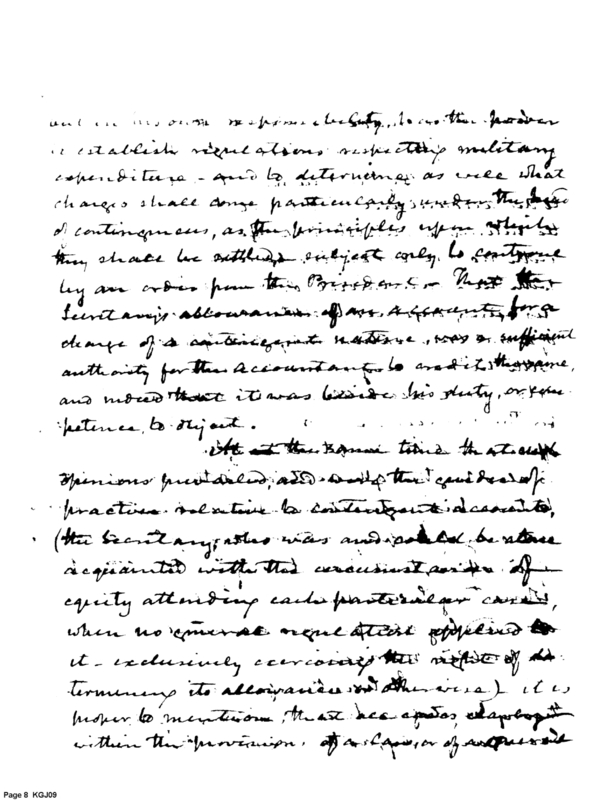
and in his own responsibility, to [the?] other [persons?] to establish regulations respecting military expenditure — and to determine as well what charges shall come particularly under the head of contingencies, as the principles upon which they shall be settled, subject only, to [continue?] by an order from the President. [Not?] that the Secretary's allowances of [undecipherable] accountant for a charge of a contingent nature, was a sufficient authority for the accountant to credit [that?] [undecipherable], and indeed that it was beside his duty, or [undecipherable] competence, to object.
At at the same time that [this?] [undecipherable] opinions prevailed, and widely that the [candours?] of practice relative to contingent accounts, (the Secretary also was and [probably?] [should?] be acquainted with the [excessive?] [undecipherable] of equity attending each particular case, when no general regulation applied to it — exclusively [governing?] the rights of its [termini?] to allow [undecipherable]) it is proper to mention, that the accounts [undecipherable] within the provisions of a [chapter?] of [various?] [undecipherable]
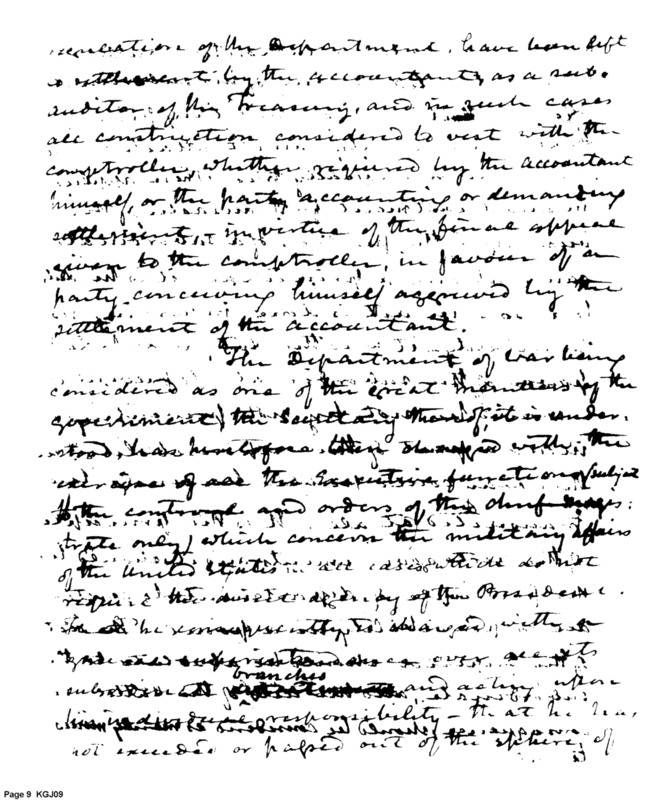
regulations of the Department, have been kept [undecipherable] by the accountant as a sub-auditor of his Treasury, and in such cases all construction considered to vest with the comptroller, whether [required?] by the accountant himself, or the party accounting or demanding settlement [undecipherable] in virtue of the final appeal given to the comptroller, in favour of a party conceiving himself aggrieved by the settlement of the accountant.
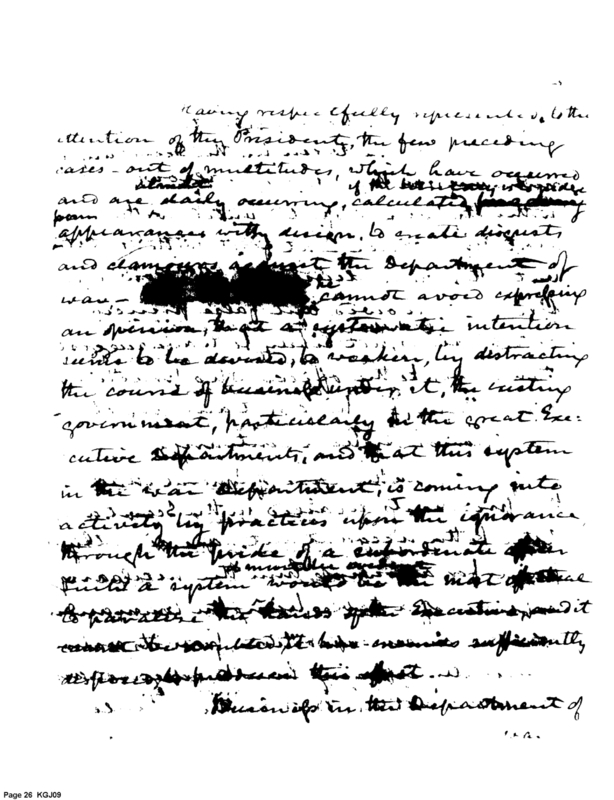
The Department of war being considered as one of the great members of the Government, the Secretary thereof is understood, has heretofore always been charged with the exercise of all the Executive functions subject to the control and orders of the chief [Magistrate?]; [strate?] only, which concern the military affairs of the United States are all [undecipherable] do not require the [undecipherable] by the [undecipherable]. To all the [consequences?] [undecipherable] [charged?] quietly [undecipherable] over all its
[strikethrough: [undecipherable]] branches
sub[ordinate?] and acting upon [undecipherable] [directing?] his own responsibility — that he has, and [approves?] of [undecipherable] not exceeds or passed out of the sphere of
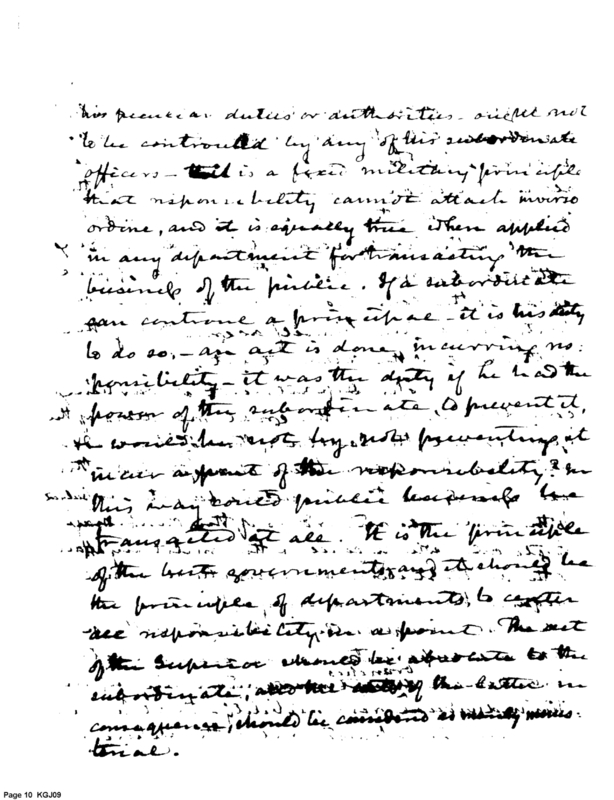
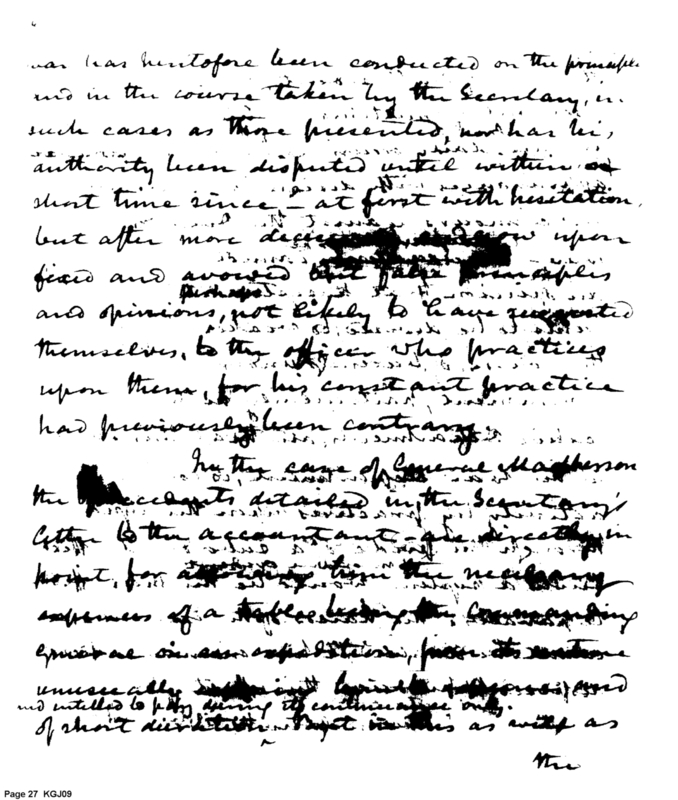
his peculiar duties or authorities, ought not to be controlled by any of his subordinate officers — This is a fixed military principle that responsibility cannot attach inverse ordine, and it is equally true when applied in any department for transacting the business of the public. If a subordinate can control a principal — it is his duty to do so, — as an act is done, incurring no responsibility — it was the duty if he had the power of the subordinate to prevent it, he would not [be?] most by preventing it [undecipherable] in [undecipherable] [appears?] of the responsibility. In this way, solid public business can [never?] [be?] [undecipherable] at all. It is the principle of the best governments, and it should be the principle of departments, to center all responsibility in a point. The act of the Superior should be attributed to the subordinate; [attaching?] [undecipherable] of the latter in consequence, should be considered as merely ministerial.
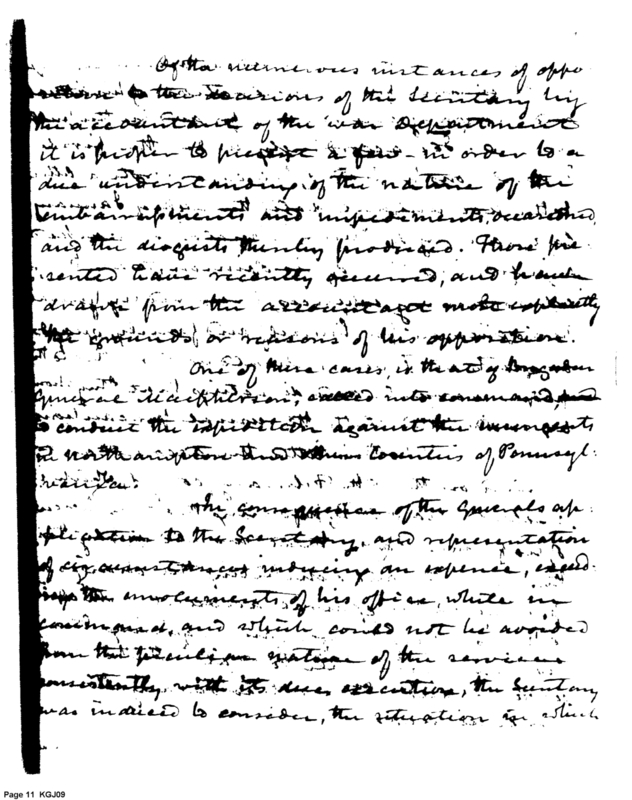
Of the numerous instances of opposition to the decisions of the Secretary by the accountant of the war Department it is proper to present a few, in order to a due understanding of the nature of the embarrassments and impediments, occasioned and the dissatisfaction thereby produced. Those presented have recently occurred, and have been drawn from the [accounts?] most explicitly [undecipherable], the grounds, or reasons of his oppositions.
One of these cases, is the act of Brigadier General [MacCalister?] called into command, to conduct the expedition against the insurgents in the north[ern?] and Western Counties of Pennsylvania.
The composition of the Generals application to the Secretary, and representation of circumstances inducing an expense, [beyond?] the emoluments of his office, while in command, and which could not be avoided from the peculiar nature of the service, consistently with its due execution, the Secretary was induced to consider the situation for which
The Secretary again wrote to the accountant on the [9th?] of February [stating?] [undecipherable] [informing?] him that upon further consideration of this subject he had decided [undecipherable] from that justice and the interests of the [undecipherable] Department, as well as [regard?] require that [undecipherable] allowance, [undecipherable] and adjustment of [undecipherable] accounts [undecipherable] [undecipherable] should be awarded the subject, agreed to his [place?] — ultimately [undecipherable] the principles and [undecipherable] and [undecipherable] [undecipherable] [separated?] in [valid?] [undecipherable], and would [protect?] [undecipherable] additional [undecipherable] [established?] regulation for the settlement
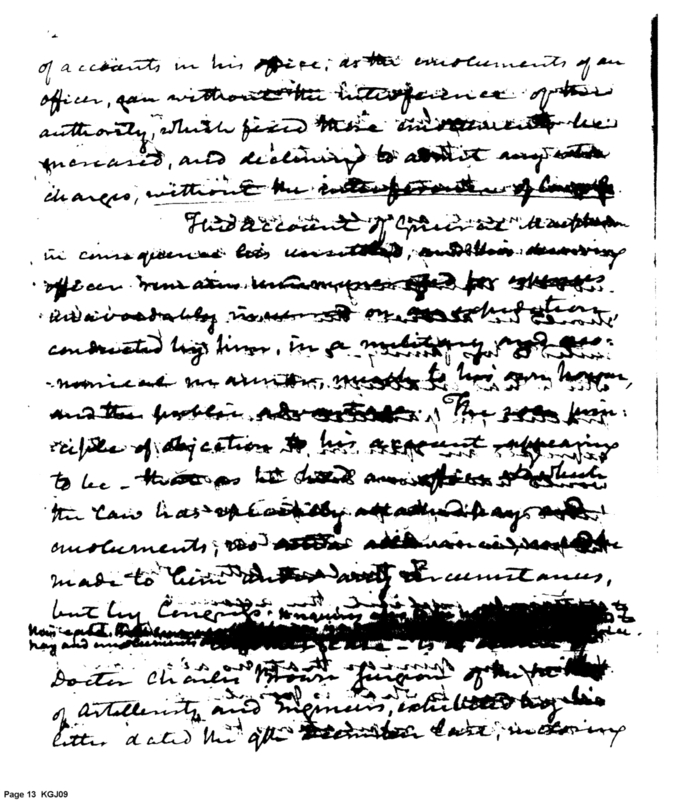
of accounts in his office, as the emoluments of an officer, can without the interference of this authority, which fixed [them?] in [undecipherable] [increased?], and declining to allow any extra charges, without the interference of Congress.
[The?] Accountant of [General?] [MacPherson?] in consequence his insisted, and this serving officer remaining uncompensated [undecipherable] inevitably increased [undecipherable] conducts by him, in a military and political character; [undecipherable] his own [honor?], and the public interests. The sole principle of objection to his account appearing to be — [these?] as [undecipherable] the law has specified [undecipherable] his emoluments; no [undecipherable] allowance [undecipherable] made to him under various circumstances, but by Congress. [undecipherable]
negated [undecipherable].
Doctor Charles [Browne?] Surgeon of the [undecipherable] of Artillery and Engineers, [undecipherable] by his letter dated the [5th?] [November?] [undecipherable] claiming
[Pages 14–15 are largely undecipherable due to heavy ink blotting and overwriting.]
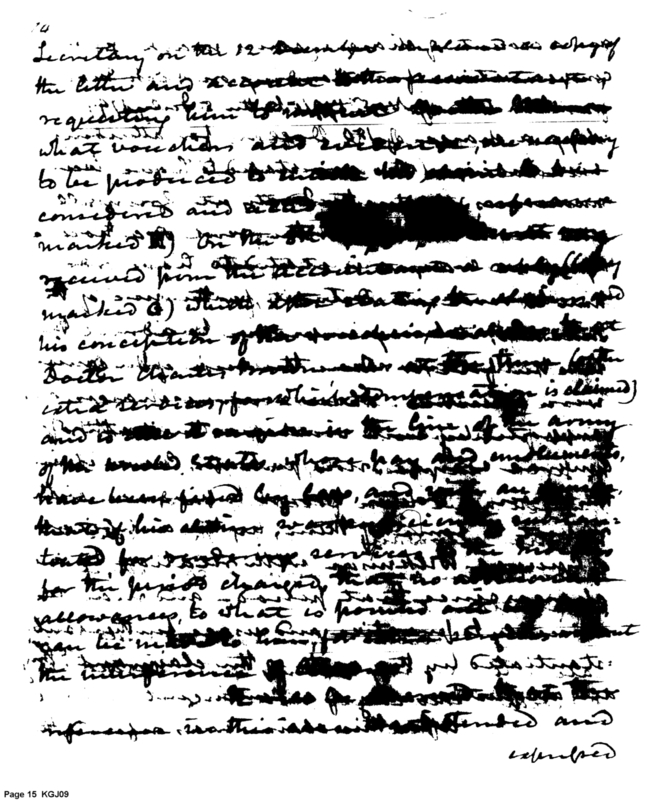
Secretary on the 12 [undecipherable] [transmitted?] a copy of the letter and representation [undecipherable] requiring him to state clearly [undecipherable] what vouchers and [undecipherable], [the?] majority to be produced [undecipherable] considered and settled [undecipherable] consideration marked 1) [undecipherable] from the accountant explaining [undecipherable] marked 2) [undecipherable] stating [undecipherable] his conception of the [undecipherable] the [undecipherable] (and [undecipherable] performance which information is claimed) [undecipherable] to suit [undecipherable] in the public [undecipherable] of the United States, [undecipherable] by pay, and enlistment, [undecipherable] for private services for the [undecipherable] charged, that no allowance [undecipherable] allowances, to what is [protected?] [undecipherable]:
expressed to be; for the purpose of obtaining for Doctor [Browne?] information that was [undecipherable] to [undecipherable] [undecipherable] [undecipherable] [undecipherable] of qualifying [undecipherable] [undecipherable] the question [undecipherable] of the claims. [undecipherable]
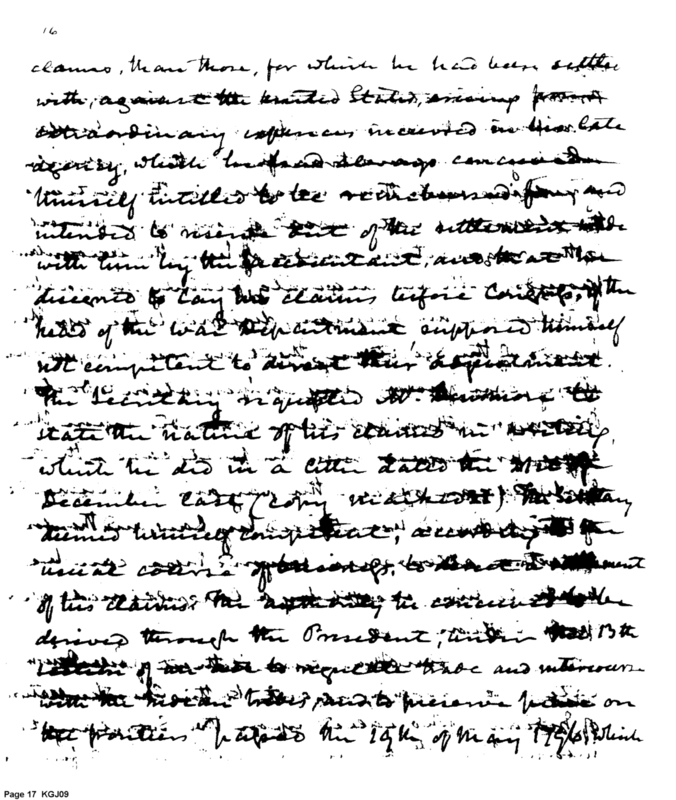
[undecipherable] late a temporary commission [undecipherable] [Partisans?] who agreed [undecipherable] the Secretary to inform him — that he conceived he had further
claims, than those, for which he had been settled with, against the United States, arising from extraordinary expenses incurred in his late capacity, which had always been considered [undecipherable] and [undecipherable] himself entitled to be reimbursed [from?] and intended to raise [part?] of the settlement [table?] with him by the accountant, and that the [undecipherable] desired to lay his claims before [Congress?] of the head of the War Department supposed himself not competent to adjust them. The Secretary required Mr. [Browne?] to state the nature of his claims in writing, which he did in a letter dated the [most?] December last (copy [without?]). The Secretary deemed himself entirely competent, according to the usual course of proceedings, to hear the settlement of this claims, the authority he conceived to be derived through the President, under that 13th [section?] of the act to regulate [those?] and intercourse with the Indian tribes, passed to preserve peace on their frontiers, [stated?] him 15th. of May [1796?] which
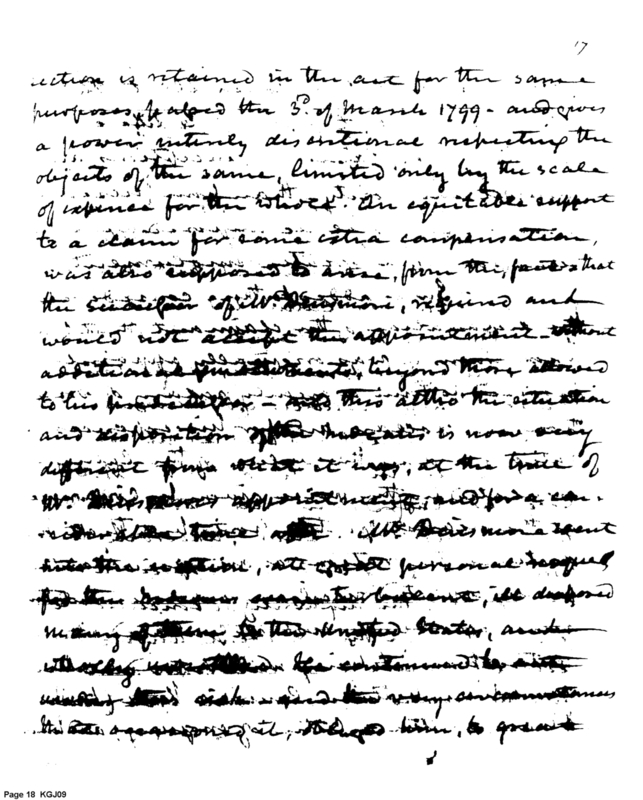
ection is retained in the act for the same purposes, passed the 3d. of March 1799 — and gives a power entirely discretionary respecting the objects of the same, limited only by the scale of expense for the whole. An equitable support to a claim for some extra compensation, was also supposed to arise, from the fact that the [undecipherable] quality [Governor?] refused and would not attain the appointment without additional emoluments, beyond those allowed to his predecessors — and this altho the situation and disposition of the [Indians?] is now very different from what it was, at the time [Browne?] was appointed [undecipherable] and for a considerable [undecipherable] [undecipherable]. [Browne?] [undecipherable] entered into the exception, all personal [inequality?] for the [undecipherable] occasions, the demands claimed [undecipherable] of them in the United States, and [undecipherable] he [undecipherable] the circumstances under the [undecipherable] his late [accompaniments?] obliged him, to grant
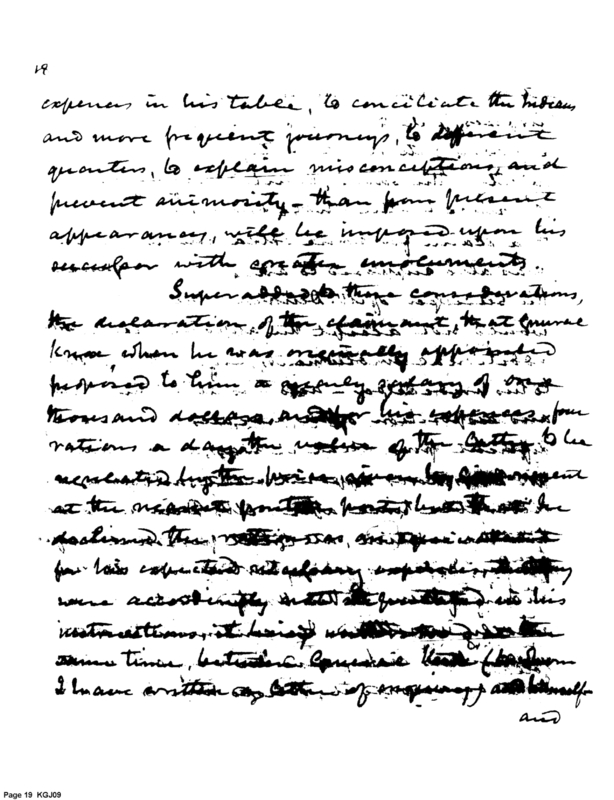
expenses in his table, to conciliate the Indians and more frequent journeys, to different quarters, to explain misconceptions, and prevent animosity — than from present appearances, will be imposed upon his successor with greater emoluments.
Superadded to those considerations, the declaration of the claimant, that [Genl?] Knox, when he was originally appointed proposed to him a yearly salary of [undecipherable] one thousand dollars, and for his expenses, for rations a daily value of the actual price, [which?] is [undecipherable] accrued by the United Government at the nearest position post, but that he declined this, [undecipherable] and was unsuitable for his expected and necessary expenses were accordingly notified [undecipherable] his instructions, it being understood to give the same time, between [Genl?]. Knox and the claimant [undecipherable] I have written any letter of enquiry and himself and
and always by himself that he was to receive a salary of [two?] [hundred?] dollars, and that his necessary expenses for a table, entertainment in the country, travelling, [undecipherable] the interests of the United States, were to be defrayed by the public, [undecipherable] himself [undecipherable] being entitled to credit [undecipherable]
[Pages 19–20 are largely undecipherable due to heavy overwriting and ink blotting.]
[James McHenry — Indian]
Indian Department, — and when he received his last instructions from the present Secretary he declined precisely as he represents to have done under the first, accepting four rations per day, as an equivalent for his table, and necessary incidental expenses, the reasons of which he was then perfectly acquainted with. Upon his so declining he was actually [undecipherable] by the Secretary, who had every reason to repose confidence in his integrity, to try whether in the then situation of things — the four rations would not cover his necessary expenses for a table and incidental — and if expenses [showed?] [undecipherable] the Secretary would do what was right. [Hawkins?], then acted as Temporary [Agent?] for the Southern [Potowmac?], was [two?] [other?] [undecipherable] per annum, and [their?] the [12?] [undecipherable] affecting the compensation were notified after due deliberation and advice. The [attendance?] of the Department refused to accept, at the same salary, and four rations, but was induced for six rations as an experiment.
Mr [Dunmore?] in fact, has never drawn rations but [has?] [per?] received an equivalent in money [undecipherable] the [accepting?] [undecipherable] his experience [without?] precludes [undecipherable] comparable [agreement?] with him. [undecipherable] [six?] months the time [undecipherable] [about?] [6000?] dollars [undecipherable] [according?] to his [confession?], it would [undecipherable] [undecipherable] to 2056 dollars. The charge [undecipherable] actually exhibited by Mr [Dunmore?] [undecipherable] is 3868 dollars — this does not appear [undecipherable] the question [undecipherable] he [practiced?] and supported his own horses, [three?] [undecipherable] all [boarded?] on [attendance?] [undecipherable] for his [provisions?] — [where?] the [undecipherable] interest at the Indians for a considerable [undecipherable] the nature of this [occurrence?] required to be frequent — and the at the above stipulated and estimated [undecipherable] his necessary expenses
Under these above [undecipherable]
[Page 22]:
the Secretary wrote to the accountant on the 28th of February last [copy?] mentioned [undecipherable] directing him to settle with Mr. [Dunmore?] [on?] the necessary expenses he incurred in the [discharge?] of his trusts as temporary [Agent?] of the [Cherokee?] from the 25th. of June 1794 — the time of his appointment, to the 2d. February 1793 [undecipherable] mentioning the principal objects to which his allowance should apply, and that if it was impracticable, to state every item for such appropriation for [vouchers?] not being attainable during [those?] [days?] into [cause?] the amount to be controlled by his oath.
On the 12th. of [March?] [undecipherable] for the Accountant [submitted?] [copies?] (copies of the accounts exhibiting [undecipherable] for Mr. [Dunmore?] [appointed?] [the?] United States and of my letter relating to them, expressing the following observations in pursuing the claim appears to be, the [President?] of the Secretaries [Office?] authorizing the account to be admitted to the credit of the United States on Mr. [Dunmore?]'s substantiating it by his oath. That
[Page 23 largely undecipherable due to heavy overwriting and ink blotting.]
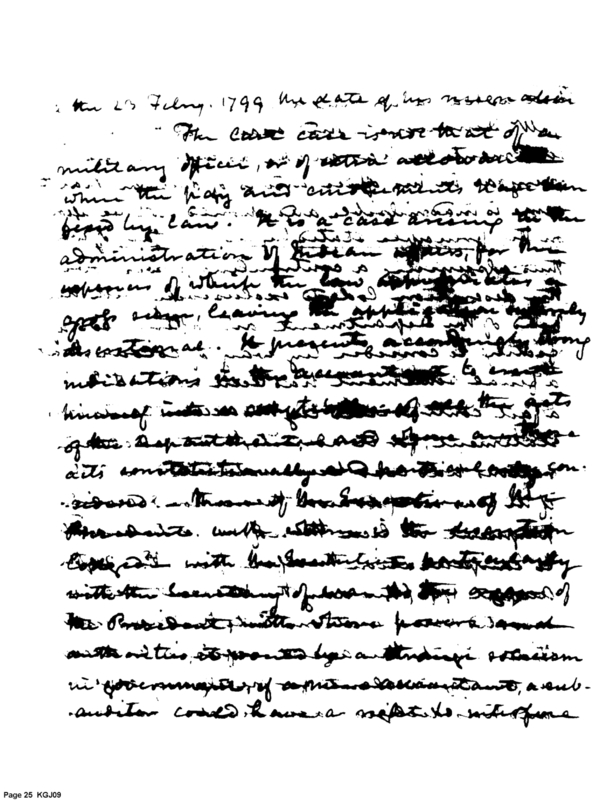
the 23 February 1799 the date of his recent [undecipherable]
The case before is not that of a military officer, or of extra accounts [undecipherable] upon the pay and emoluments, fixed on him [undecipherable] by law. It is a case arising in the administration of Indian affairs, for the [undecipherable] of which the law [undecipherable] [open?] [undecipherable], leaving the application entirely to [discretion?]. It presents accordingly [undecipherable] [strong?] [undecipherable] that the [undecipherable] Department to engage the services of [undecipherable] kind of interest [undecipherable] of the Department, and all these [undecipherable] constitutionally and practically [undecipherable] [undecipherable] [authorities?] of the Departments with the [consultation?] [agreed?] with the Secretary of war, the [approach?] of the President; with those powers derived [anew?] on this [undecipherable] [undecipherable] in government of a [ministerial?] [Accountants?], a sub-auditor could have a right to interfere
[the?] Accountant [and?] [undecipherable] in any time [undecipherable] administration of a department, [specifically?] those [business?] of which [he has?] [undecipherable], cannot be subjected, to the [comments?] of a subaltern or subordinate officer, for its functions emanate from the [instructions?] of [Executive?], and the [undecipherable] [undecipherable] of [undecipherable] facts and the [undecipherable] [undecipherable] [undecipherable] [undecipherable] attending [limiting?] [undecipherable] [undecipherable] operations, [being?] the Secretary, their disputes [undecipherable] [undecipherable], will always make for the [government?] [undecipherable] [undecipherable] accountant [increased?] to [continue?] [undecipherable] [undecipherable], be a ministerial one only. [undecipherable] The principles [undecipherable] extended by the accountant [undecipherable] no authority, that of [undecipherable] [undecipherable] allowances, to any ones, [undecipherable] beyond the [wage?] and emoluments, [undecipherable] to his office be [undecipherable] will be much [alleged?] with the [undecipherable] avowed by [undecipherable] treated the positions as yet avowed. It were [undecipherable] to be the worst lengths of denying to the Executive in all its branches any discretion not conferred by some special law, to call forth and [compensate?] [undecipherable] services not [understandably?] of officers
[undecipherable] of any other persons, which are not [undecipherable] and provided for by particular statutes. It will [undecipherable] [intercept?] the employment, and compensation of a citizen as a [writer?], or even as an express, no [if?] than that of an officer for either purpose. The
foundation of this doctrine must be, that there is no power in the Executive to subject the public to expense, in any case not [undecipherable] particularly [mentioned?] by law. What substantial differences can there be, between employing [undecipherable] for some contingent service [undecipherable] and compensating him for it, and employing an officer to do something not within the sphere of his [official?] duties and compensating him for it — in cases [discovered?] by [inquiry?] [undecipherable] to convert the officer to a private [party?] [undecipherable] no law declares a distinction. The rule [undecipherable] and that it has been [practiced?] from this [use?], and that allowed [occurred?] [the?], upon offices [undecipherable], have [undecipherable] in [undecipherable] administration beyond the emoluments allotted by law, for unusual [undecipherable] occasions, nor [undecipherable] [subaltern?] obstruction for instances duties in relation to usual orders and course of
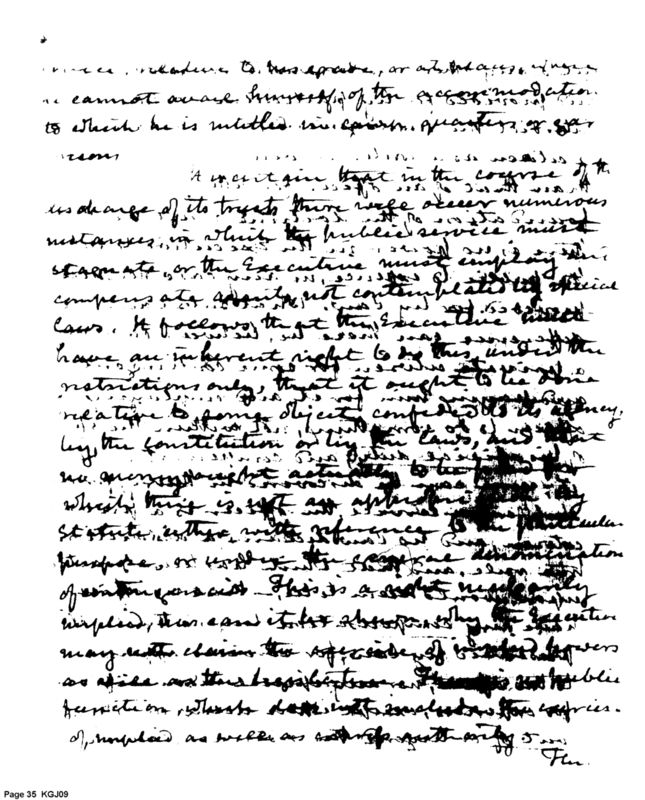
[undecipherable] [undecipherable] to transpose, or at best [undecipherable] and he cannot avail himself of the accommodation to which he is entitled in [court?] quarters or [other?] reasons
A [merit?] gives that in the course of the discharge of its trusts there were also occurred numerous instances in which the public service must [undecipherable] or the Executive must employ [undecipherable] and compensate additional [undecipherable] not contemplated by laws. It follows that the Executive will have an inherent right to do this under the restrictions only, that it ought to be done relative to some objects confided [undecipherable] to them, by the constitution or by the laws, and that [undecipherable] no [undecipherable] ought to the [fund?] that [undecipherable] [undecipherable] [statute?] [otherwise?] with reference to the particular purposes, or [undecipherable] the scope and denomination of contingencies — This is a [need?] necessarily implied, thus cases it [also?] [undecipherable] why the Executive may into the service of [unlimited?] powers as [afar?] and than [begin?] [undecipherable] and the public functions their offices and the public functions their classes, of [undecipherable] as well as [attending?] ones — The
[Page 36 largely undecipherable due to very heavy overwriting.]
[undecipherable] to [perpetuate?] to the [worth?] right
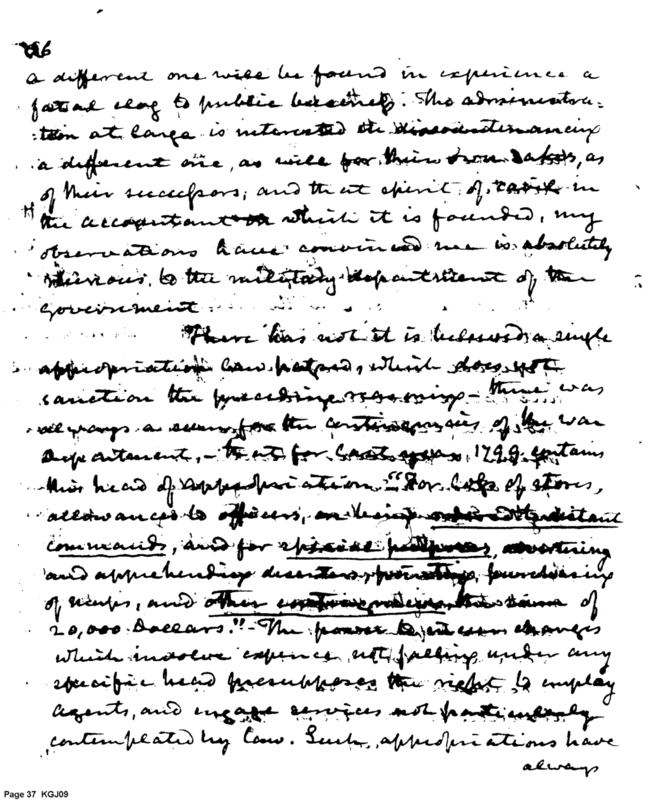
a different one will be found in experience a fatal clog to public [business?]. The administration at large is interested in discountenancing a different one, as will for their own sakes, as of their successors; and that spirit of [party?] in the accountant on which it is founded, my observations have convinced me is absolutely [injurious?] to the military department of the government.
There has not it is believed a single appropriation law passed, which does not sanction the preceding reasoning — there was six years a sum for the contingencies of the War Department, — the act for last year 1799, contains this head of appropriation: "for [like?] of stores, allowances to officers, [on?] [being?] under [distinguished?] commands, and for special purposes, advertising and apprehending deserters, [recruiting?], purchasing of [supplies?], and other contingent [undecipherable] the sum of 20,000 dollars." — The power to [incur?] charges which involve expense not falling under any specific head [undecipherable] the right to employ agents, and engage services not particularly contemplated by law. Such appropriations have always
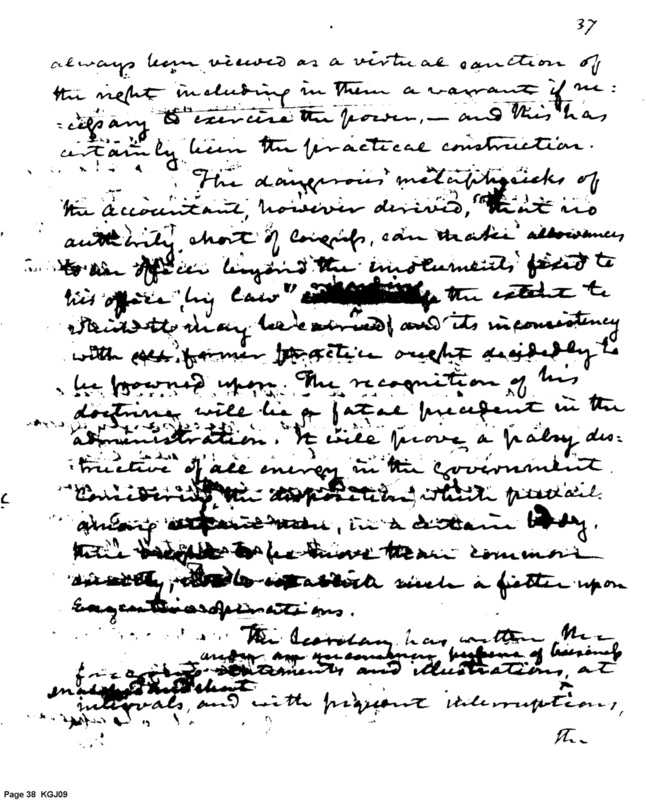
always been viewed as a virtual sanction of the right including in them a warrant if necessary to exercise the power, — and this has certainly been the practical construction.
The dangerous metaphysicks of the Accountant, however derived, that no authority short of Congress, can make allowances to any officer beyond the emoluments fixed to his office by law [omitting?] the extent to which they may be [earned?] and its inconsistency with all former practice ought decidedly to be frowned upon. The recognition of his doctrine will be a fatal precedent in the administration. It will prove a palsy destructive of all energy in the Government. [Considering?] the dispositions which prevail among [extreme?] [undecipherable], in a certain body, that the [Departments?] [or?] [power?] [have?] them common direction, [undecipherable] an article a letter upon Executive operations.
The Secretary has written the [above?] amid an [incumbering?] [pressure?] of business documents and illustrations, at [exhausted?] [undecipherable] [short?] intervals, and with frequent interruptions, The
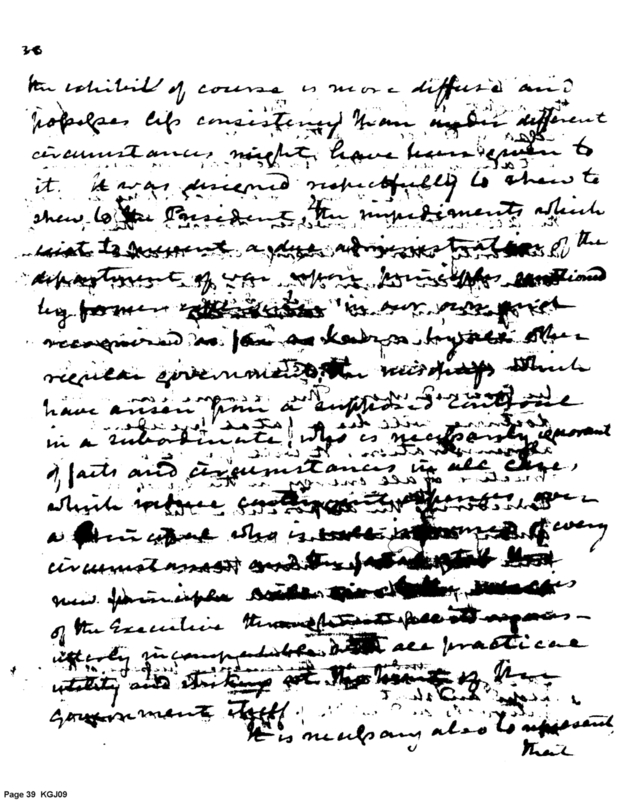
the exhibit of course is more diffused and [proposes?] less consistency than under different circumstances might have been given to it. It was deemed respectfully to shew to shew to the President, the impediments which [exist?] to prevent a due administration of the Department of war upon principles established by former [authorities?] in our own [preceding?] recognized as far as known by itself other regular [governments?] [undecipherable] which have arisen from a subordinate [employee?] in a subordinate who is necessarily ignorant of facts and circumstances in all else, which [inform?] [ones?] [changes?] [over?] a [thorough?] [captain?] who is well informed of every circumstance and [undecipherable] new principles [arising?] [undecipherable] of the Executive [departments?] [undecipherable] utterly incompatible with all practical utility and striving out the [basis?] of the government itself.
It is necessary also that
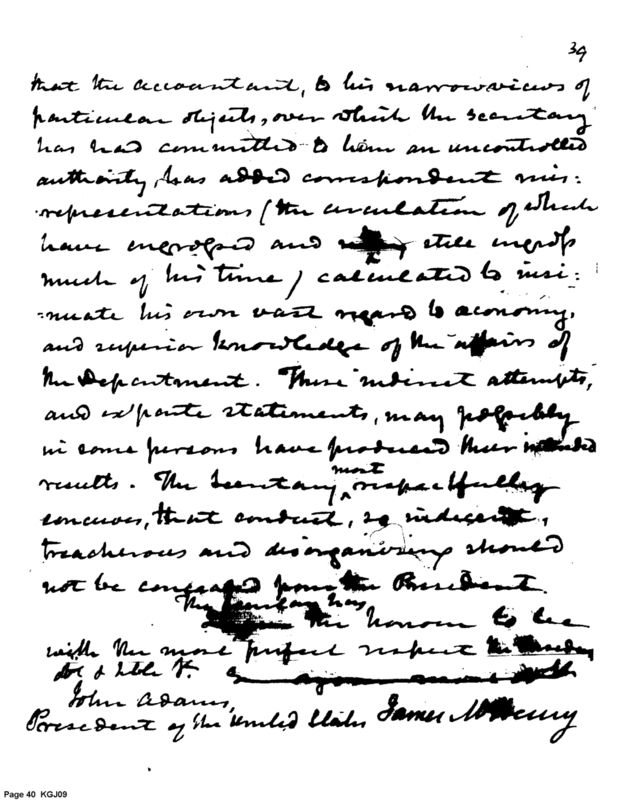
that the accountant, to his narrow views of particular objects, over which the Secretary has had committed to him an uncontrolled authority, has added correspondent misrepresentations (the circulation of which have engrossed and still engross much of his time) calculated to insinuate his own vast regard to economy, and superior knowledge of the affairs of the Department. Those indirect attempts, and ex-parte statements, may possibly in some persons have produced their intended results. The Secretary most respectfully concurs, that conduct, so indecent, treacherous and disorganizing should not be concealed from the President.
The Secretary has the honour to be with the most perfect respect [undecipherable] Sir [undecipherable] &c.
John Adams,
President of the United States. James McHenry
Type
Autograph Draft Letter Signed
Description
Largely illegible draft of a letter to the President of the United States. Relates to the running of the War Department, with specific mention of the duties and powers of the Accountant of the War Department.
Date
04/02/1800
Author
Recipient
Repository
Collection
Document number
1800040200301
Page start
1
Notable persons
John Adams
James McHenry
Department of War
President of the United States
Secretary of War
Accountant
Paymaster General
Congress
Treasury Department
comptroller
Auditor of the Treasury
Brigadier General Macpherson
Doctor Charles Brown
surgeon
Artillerists and Engineers
Indian Department
Hawkins
Dinsmore
Treasurer
Notable locations
War Department
Greenville
Greeneville
Notable items
office
accounts
refunds
powers
branch
vouchers
compensation
extra service
pay and emoluments
military grades
military establishment
land forces
naval forces
ships
warlike stores
Indian affairs
Act
pay of the army
subsistence
expenses
recruiting service
contingent expenses
incidental expenses
claims
inspection
duties
military principle
house
rations
case
public business
appropriation