

Message Relative to Military Establishments
Document 1798Message of the President with a report of the Secretary of War relative to military establishments.
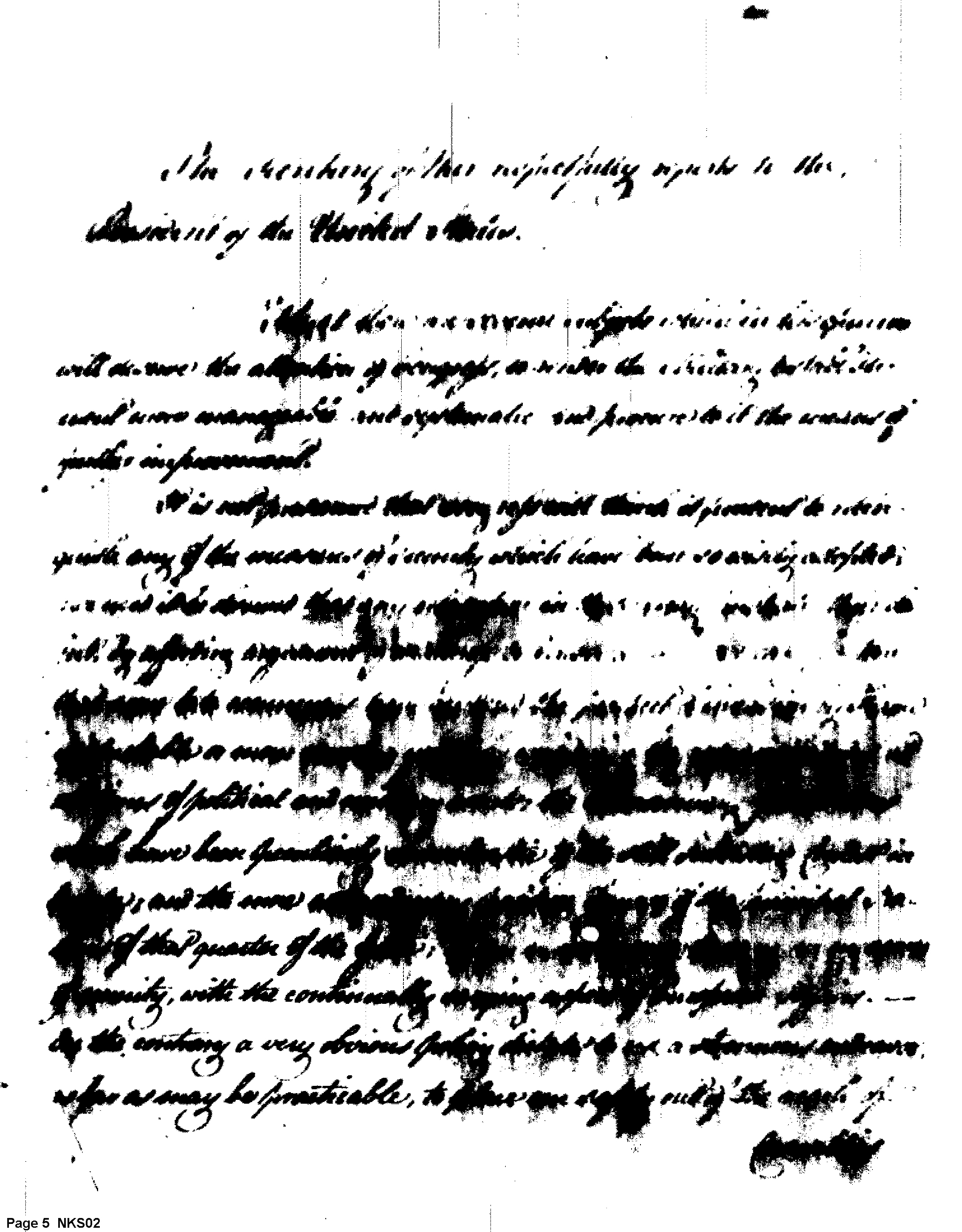
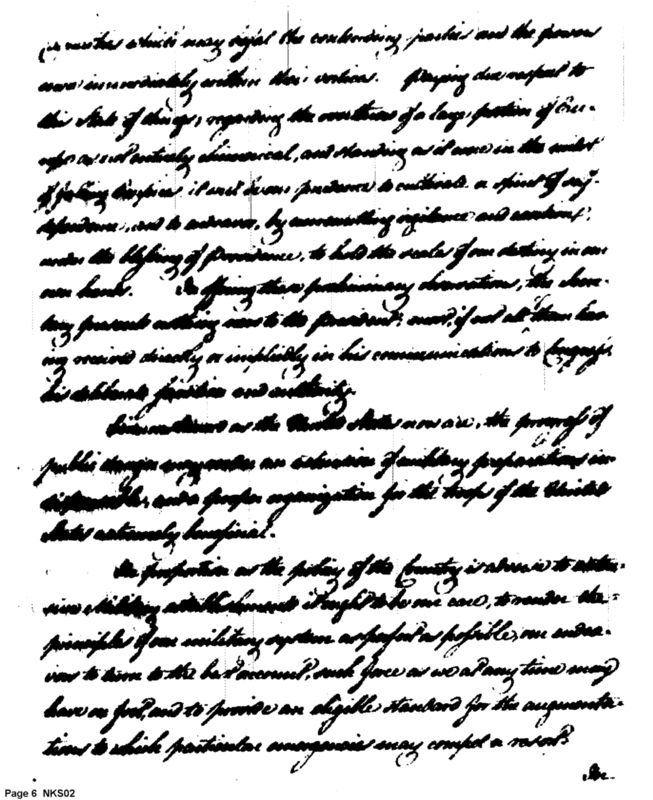
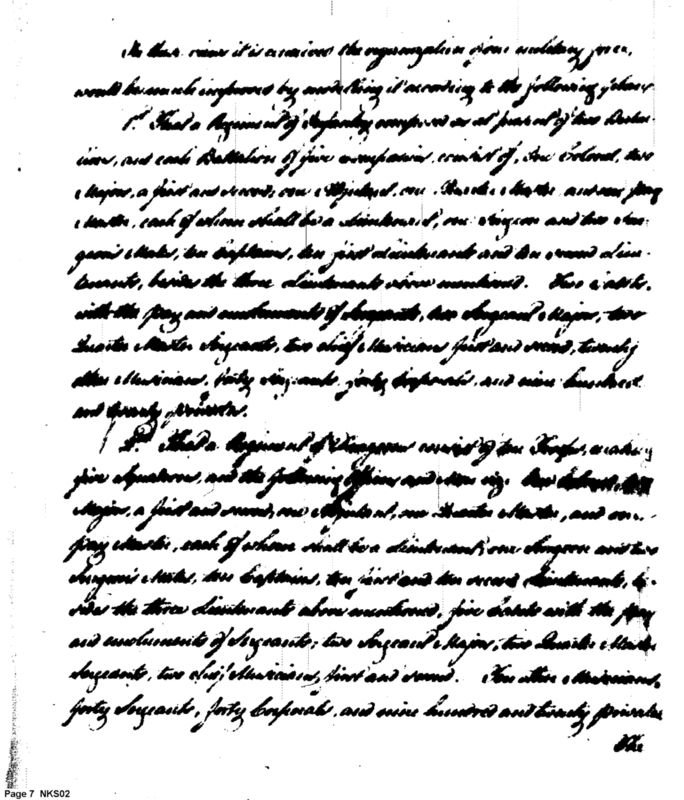
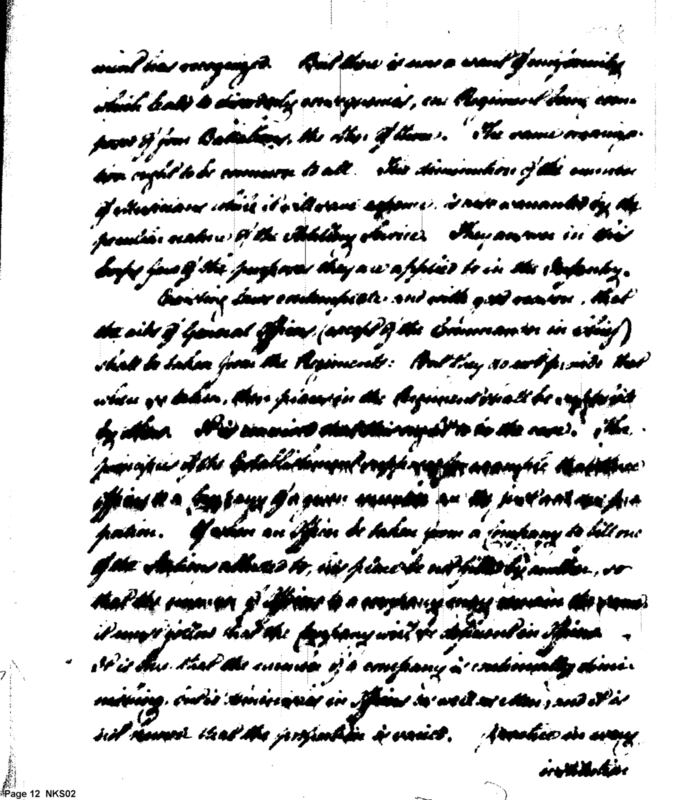
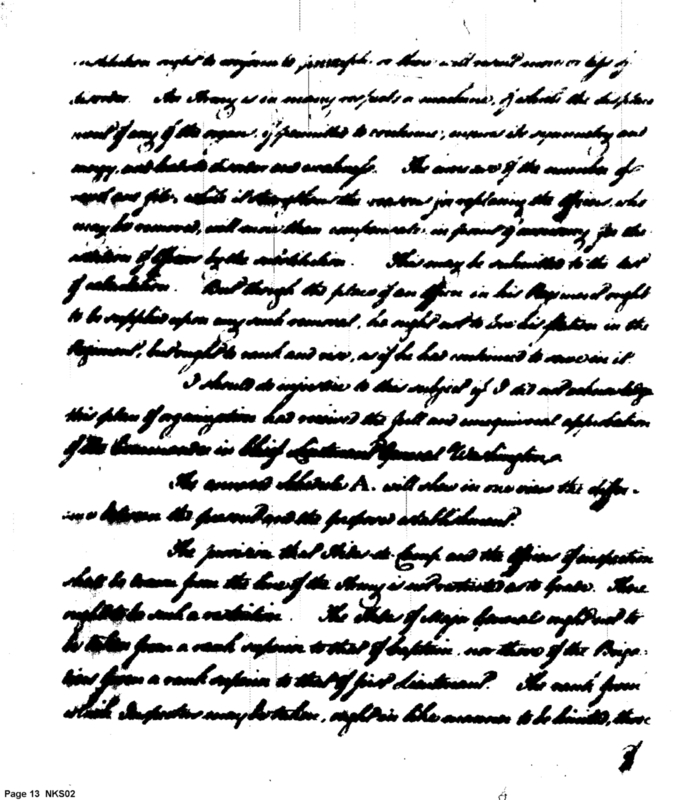
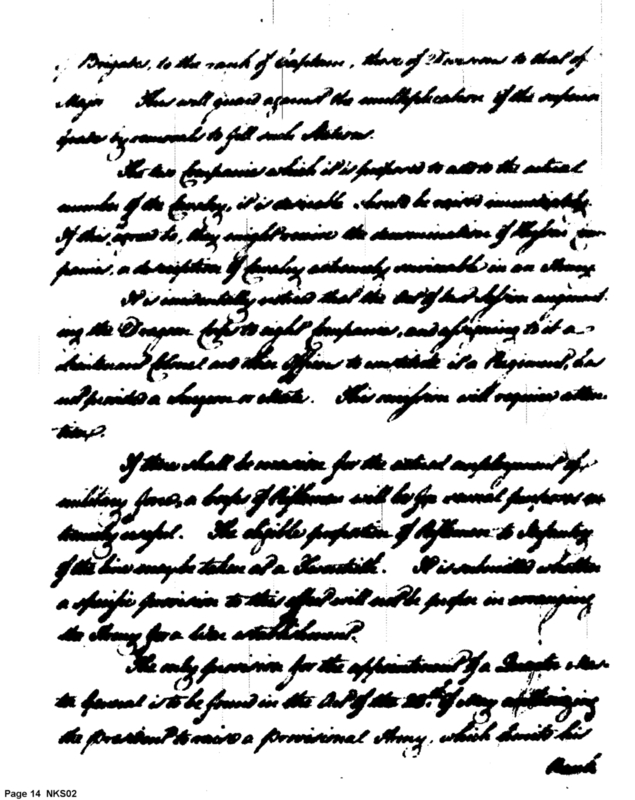

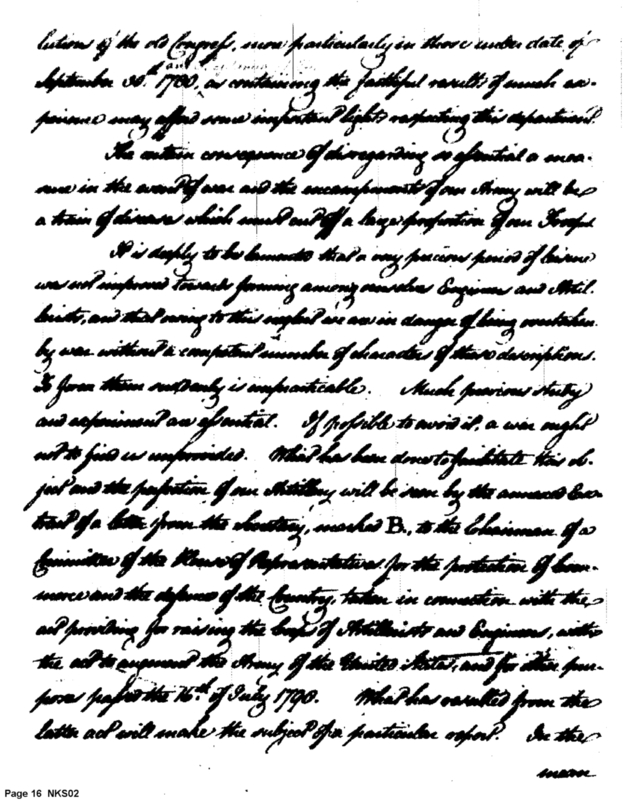



No human transcription currently available for this document.
This transcription was generated by machine using Anthropic's Claude Code (model sonnet 4.6). It may contain errors or inaccuracies. Please verify against the document image. Learn more about our generative AI methodology.
Now I have all the images. I'll compose the full transcription as a continuous document.
The Secretary of War respectfully reports to the,
President of the United States.
That there are various subjects relative to his [department?] which will deserve the attention of Congress, on which the ordinary, but little less [undecipherable] some manageable and systematic and promise to it the seasons of further improvements.
It is not presumed that every [report?] thereof is pointed to interfere with any of the measures of a country which have been so wisely established; nor need it be claimed that any criticism on the [undecipherable] policy, on their [undecipherable] is an [undecipherable] right by affecting arguments [undecipherable] [undecipherable] laws of political and [undecipherable] [undecipherable] have been [undecipherable] that these, attaining [undecipherable] and the more [undecipherable] [undecipherable] of that quarter of the [undecipherable] community, with the continuously striving [undecipherable] [undecipherable] By the contrary a very obvious [policy?] dictated by a determined entrance, as far as may be practicable, to [follow an right?] only the most [undecipherable]
in matters which may excite the controversy, parties and the persons more immediately within their orbits. Playing due respect to the State of things, regarding the overthrow of a large portion of Europe as not entirely chimerical, and standing as it were in the midst of fighting disputes, it and seems prudent to cultivate a spirit of self dependence, and to endeavour, by unwearying vigilance and exertion; under the blessing of Providence, to hold the scales from shaking in our own hands. In offering these preliminary observations, the Secretary presents nothing new to the President's mind, if not all then having been received directly or implicitly in his communications to Congress. He addresses himself to his situation and authority.
Such matters as the United States are in, the prospect of public danger occasions an extension of military preparations indispensable, and a proper organization for the troops of the United States extremely beneficial.
In proportion as the policy of the Country is adverse to attaining military establishments thought to be one end, to render the principles of our military system as perfect as possible, one endeavours to turn to the best account, such force as we at any time may have on foot, and to provide an eligible standard for the augmentation to which particular emergencies may compel a resort.
In this view it is obvious the organization of our military force would be materially improved by modelling it according to the following plan:
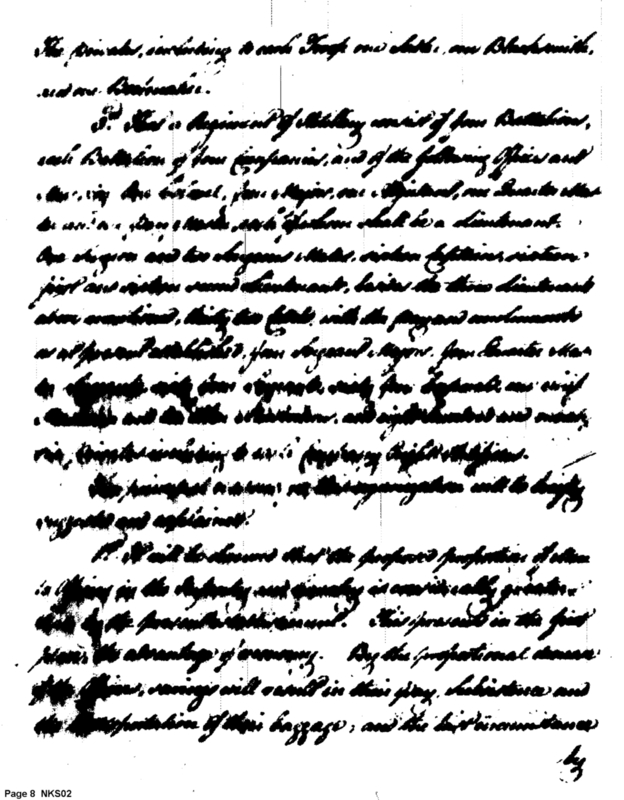
1st. That a Regiment of Infantry comprises as at present of two Battalions, and each Battalion of five companies, consist of, two Colonel, two Majors, a first and second, one Adjutant, one Quarter Master [and] one Surgeon; each of whom shall be a lieutenant; one Surgeon and two Surgeon's Mates, ten Captains, ten first Lieutenants and ten second Lieutenants, besides the three Lieutenants above mentioned. Two Cadets, with the pay and emoluments of Sergeants, two Sergeant's Major, two Quarter Master Sergeants, two chief Musicians first and second, twenty other Musicians, forty Sergeants, forty Corporals, and nine hundred and [thirty?] privates.
2d. That a Regiment of Dragoons consist of ten Troops, at each y five squadrons, and the following Officers and other [officers?]: [two?] Colonel [undecipherable] Majors, a first and second, one Adjutant, one Quarter Master, and one Pay Master; each of whom shall be a lieutenant; one Surgeon and two Surgeon's Mates, [two?] Captains, ten first and ten second Lieutenants, besides the three Lieutenants above mentioned, five Cadets with the pay and emoluments of Sergeants; two Sergeant's Major, two Quarter Master Sergeants, two chief Musicians first and second. Two other Musicians, forty Sergeants, forty Corporals, and nine hundred and twenty privates.
The privates, including to each Troop one Sadler, one Blacksmith, and one Bootmaker.
3d. That a Regiment of Artillery consist of four Battalions, each Battalion of four Companies, and of the following Officers and [others?]: two Colonel, four Major, one Adjutant, one Quarter Master [and to?] serve as them; each of whom shall be a lieutenant; [two?] Surgeons and two Surgeon's Mates, sixteen Captains, sixteen first and sixteen second Lieutenants, besides the three Lieutenants above mentioned, thirty two Cadets, with the pay and emoluments as at present established, four Sergeant's Major, four Quarter Master [Sergeants?], only four Corporals and [undecipherable], and eight hundred and ninety six Privates, consisting to [each?] [undecipherable] Officers.
The principal features of the organization will be highly expanded and effectual.
It. It will be shown that the proposed proportion of officers is [relatively?] in the Infantry and Artillery is considerably greater than that by the present Establishment. This proceeds in the first place, the advantage of economy. By the proportional diminution of Officers, savings will result in their pay, subsistence and the transportation of their baggage; and the last circumstance
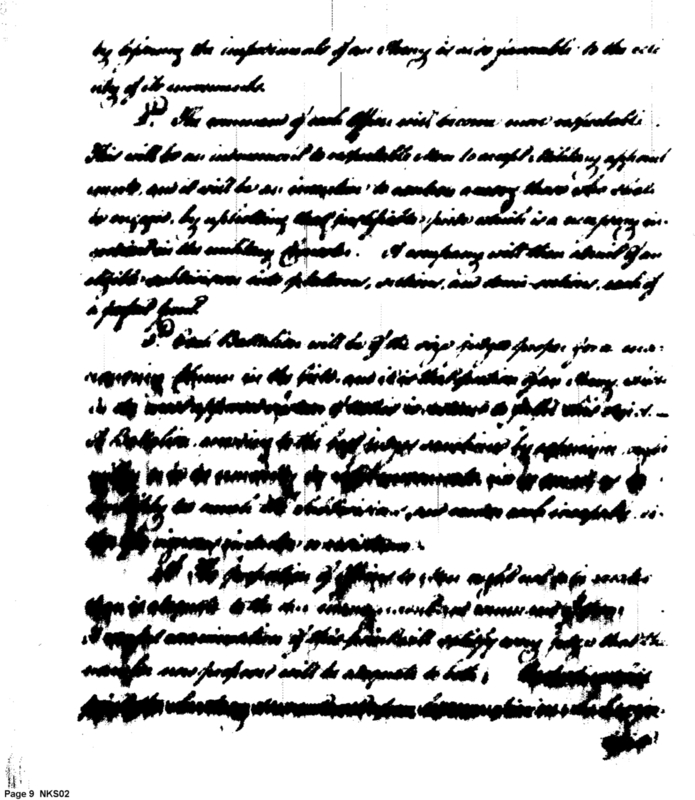
by lessening the impediments of an Army is as far as practicable to the celerity of its movements.
2d. The command of each Officer will become more respectable. This will be an inducement to respectable citizens to accept Military appointments, and it will be an inducement to continue among those who shall be engaged, by exciting that [gratification?] of pride which is a necessary incitement to the military [?]. A company will then stand from an eligible conditions and relations, [creation?], and [other?] nations, each of a perfect [?].
3d. Each Battalion will be of the size judged proper for a maneuvering [distance?] in the field, and [it is?] the best [position?] of an Army; answer in practice to [?] this [?]. A Battalion, according to the best judges considered by opinion, ought to be of [undecipherable] for that, and of [undecipherable] each [undecipherable], and [undecipherable] each [undecipherable], and [undecipherable] much [undecipherable], and [undecipherable] permanent promotions.
4th. The promotion of Officers to other [?] and to [?] promotion is [adverse?] to the [war?] enemy [undecipherable] communications and [letters?] a [?] communication of this [principle?] shall satisfy every judge that the matter was proposed will be adequate to [it?]. [undecipherable] particularly with the placing [undecipherable] the communication [undecipherable] in the [undecipherable]
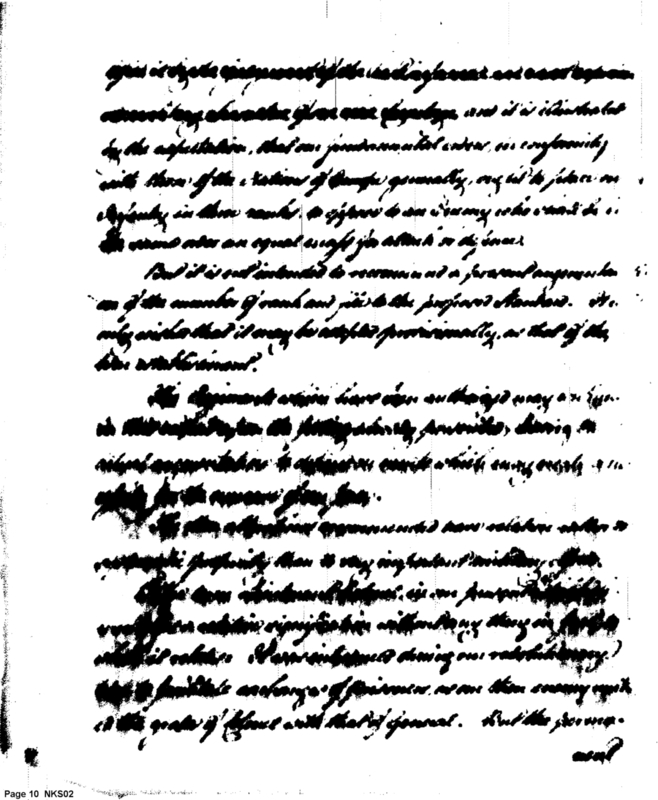
grees in [undecipherable] the inadequacy and excess [undecipherable] more establishing the character for our [?] knowledge, and it is illustrated by the supposition, that our fundamental order, in conformity with those of the Nations of Europe generally, must be to [?] in those modes. To [?] does an Army ratio extract it on the same order [?] attack in its lines.
But it is not intended to recommend a formal augmentation [?] of the number of men and [?] to the proposed standard. It is only wished that it may be adopted provisionally, as that of the [last?] establishment.
The Regiments which have been authorized many on [?] are [undecipherable], from all [particularly?] promised, during an actual augmentation to replace [?] which coming [undecipherable] of [?] with [undecipherable] their less [undecipherable]
[undecipherable] after adjustment [undecipherable] have relative matter as [undecipherable] prosperity this very [important?] Military [affairs?] [undecipherable] from [?] Establishment, in our present [undecipherable] organization without any thing of [undecipherable] There are [?] exchanges drawing on [undecipherable] less to facilitate exchanges of prisoners, no more than every equal in the grade of [?] with that of General. But the [undecipherable] man
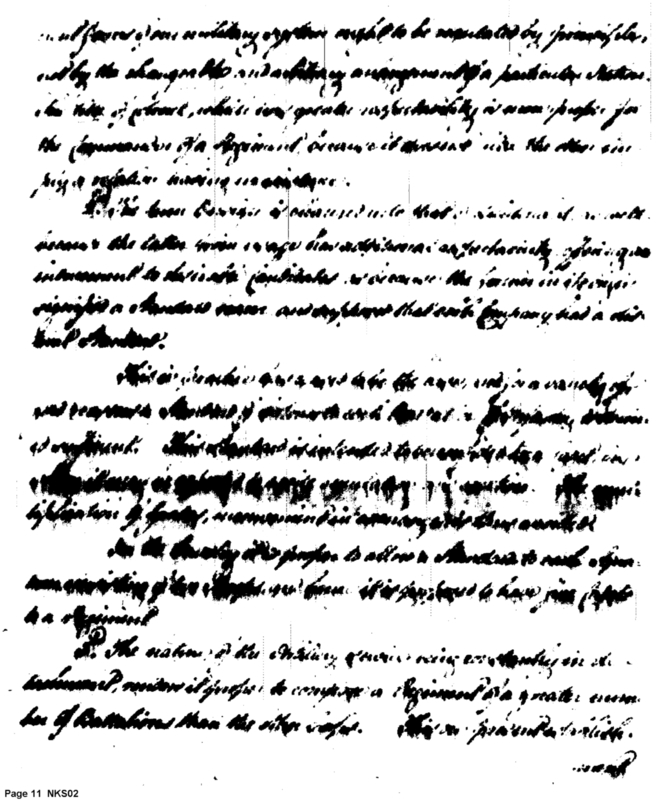
all forms of our military systems ought to be regulated by [practical?] elements, and by the changeable and shifting arrangements of a particular Nation, the title of [General?], which ever greater respectability is more proper for the [command?] of a Regiment; [because] it seems it rides the other side [undecipherable] higher relating management [undecipherable]
3d. It has been [?] considered that a [situation?] at which [undecipherable] becomes the latter [order?] to have had [additional?] [undecipherable] [professionally?]; [advancing?] the service in the regiment's [right?] and anywhere that each Company had a distinct standard.
This is [founded?] on very [?] the age and, in a variety of very recent Measures, of officers and [?] companies. This standard is calculated to be composed with [?] size and in [undecipherable] of [?] within [undecipherable] The [constitution?] of [?] [undecipherable] [accompanying?] [?] of [?] those united [undecipherable]
In the [?] it is proper to observe a Standard to each of [?] number [?] appointing of the [?] it is important to have [three?] [?] in a Regiment.
2. The nature of the [Artillery?] general [office?], which are [undecipherable] numbers it [proper?] to constitute a Regiment of a greater number of Battalions than the other [cases?]. This is particularly [undecipherable]
mind this emergency. And there is more a want of uniformity which leads to disorderly consequences, one Regiment there comprising of four Battalions, the other of them. The same organization required to be common to all. The diminution of the number of Musicians which it likewise appears, is now demanded by the prevailing mode of the Artillery service. They are used in the best form of the purposes they are applied to in the Infantry.
Granting their contemplations and with good reason, that the aids of General Officers (except of the Commander in chief) shall be taken from the Regiments: But they need provide that when so taken, their places in the Regiment shall be supplied by others. His manner contemplated to be the same. The principle of the Establishment particularly that the Officers to a Company [is?] mounted on the [?] and [?] of pension. [Of?] when an Officer is taken from a Company to fill one of the Stations alluded to, his place is not [filled?] by another, so that the number of Officers to a Company may remain the number [?] that the Company will not be deficient in Officers. It is thus that the number of a Company is continually diminishing, and its diminution in Officers as well as [others?], and it is not [certain?] that the proportion is varied. Members are any
institution ought to be [?] to [?] so there will never come on [?] of deserter. The Army as in every respects a machine, of which the chapters, need of any of its organs, if permitted to continue; impairs its organization and energy, and [loses?] its [spring?] and [?]. The increase of the number of each [?] fills [?] it [?] the vacancies for replacing the Officers, who may be removed, will more than compensate in [?] of economy, for the addition of Officers by the institution. This may be submitted to the test of calculation. And though the place of an Officer in his Regiment ought to be supplied upon any such removal, he ought not to lose his station in the Regiment; but ought to rank and rise, as if he had continued to occupy it.
I should do injustice to this subject if I did not acknowledge this plan of organization had received the full and unequivocal approbation of the Commander in Chief Lieutenant General Washington.
The annexed Schedule A. will shew in one view the difference between the present and the proposed establishment.
The provision that Aides de Camp and the Offices of Inspection shall be taken from the line of the Army is not restrictive as to grades. There might be such a restriction. The Aides of Major Generals ought to be [taken?] from a rank inferior to that of Captain. [no?] there of the Brigadiers from a rank inferior to that of first Lieutenant? The ranks from which Inspectors may be taken, ought in like manner to be limited, there
Brigades, to the rank of Captain, those of Subalterns to that of Major. This will guard against the multiplication of the inferior grades by removals to fill such Stations.
The two Companies which it is proposed to add to the actual number of the Infantry, it is desirable, should be raised immediately. If this agreed to, they might receive the denomination of [?] Companies, a description of Infantry extremely valuable in an Army.
It is immediately settled that the Act of last Session assigning the Dragoon Corps to eight Companies, and affixing to it a Lieutenant Colonel and other Officers to constitute it as a Regiment, has not provided a Surgeon or [elites?]. This omission will requires attention.
If there shall be occasion for the actual employment of military forces, a Corps of Riflemen will be for several purposes entirely useful. The eligible proportion of Riflemen to Infantry of the line may be taken at a [twentieth?]. It is submitted whether a specific provision to this effect will not be proper in arranging the Army for a later establishment.
The only provision for the appointment of a [Brigadier?] General is to be found in the Act of the [25th?] of [May?] authorizing the President to raise a Provisional Army, which limits his
rank and emoluments to those of Lieutenant Colonel. This provision is conceived to be entirely inadequate for a war establishment. The military duties of the Office are of a nature to render it of the [underline: first importance] in an Army; demanding great and peculiar abilities, and a character every way worthy of trust. Accordingly it is the general practice, founded upon very substantial reasons to confide it to an Officer of high Military Rank. The probability is, that without a similar arrangement on our part, we shall not be able to command a fit character, and in taking one of inferior pretensions, we shall subject the service to disadvantages out of all proportion to any objections which may be supposed to militate against the conferring of such rank. It is feared that an appointment under such a provision will only create embarrassment should there be real necessity for military exertions, and that the alternative must be either to leave the Army destitute of so necessary an organ, or to give it one likely in the progress of things to prove unequal to the task. A new provision on this subject appears absolutely indispensable.
The Secretary does not discover in any of the Acts, the necessary provision for the appointment of Hospital Officer, or a Hospital establishment. Military Hospitals are indispensable to an Army, especially in time of war, it is respectfully suggested that provision on the subject ought to be made by law, and that the regulations to be found in the regu-
lutions of the old Congress, more particularly in those under date of September 30th 1780, as containing the faithful results of much experience may afford some important lights respecting this department.
The entire consequence of disregarding so essential a measure in the event of war and the encampments of our Army will be a train of disasters which would cut off a large proportion of our Troops.
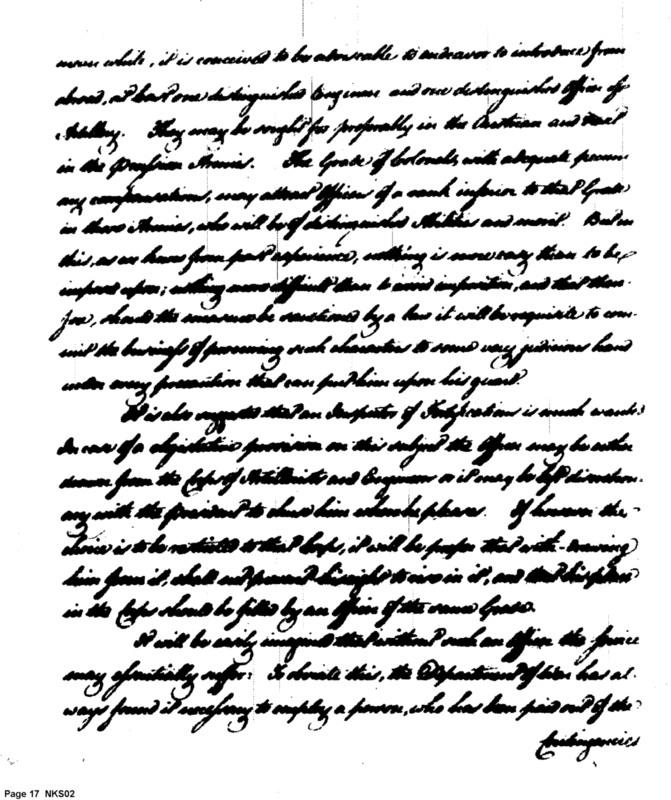
It is deeply to be lamented that a very precious period of leisure was not improved towards forming among ourselves Engineers and Artillerists, and that owing to this neglect we are now in danger of being overtaken by war without a competent number of characters of these descriptions. To form them instantly is impracticable. Much previous study and experience are essential. If possible to avoid it, a war ought not to be found us unprovided. What has been done to facilitate this object and the proficiency of our Artillery will be seen by the annexed Extract of a letter from the Secretary, marked B., to the Chairman of a Committee of the House of Representatives for the protection of Commerce and the defense of the Country, taken in connection with the act providing for raising the Corps of Artillerists and Engineers, with the act to augment the Army of the United States, and for other purposes passed the 16th of July 1798. What has resulted from the latter act will make the subject of a particular report. In the
mean while, it is conceived to be advisable to endeavour to introduce from abroad, at least one distinguished Engineer, and one distinguished Officer of Artillery. They may be sought for preferably in the Austrian and [French?] in the Prussian Armies. The Grade of Colonels, with adequate pay and compensations, may attract Officers of a much inferior to that Grade in those Armies, who will be of distinguished Abilities and merit. But in this, as we have from past experience, nothing is more easy than to be imposed upon; nothing more difficult than to avoid imposition, and that therefore, should the measure be sanctioned by a law it will be requisite to commit the business of procuring such characters to some very judicious hand under every precaution that can put him upon his guard.
It is also suggested that an Inspector of Fortifications is much wanted. In case of a legislative provision on this subject the Officer may be either drawn from the Corps of Artillerists and Engineers or it may be left discretionary with the President to choose him wherever he pleases. If however the choice is to be restricted to that Corps, it will be proper that with-drawing him from it, shall not prevent the right to rise in it, and that his place in the Corps should be filled by an Officer of the same Grade.
It will be easily imagined that a position such an Officer this [service?] may effectually confer: To obviate this, the Department of State has always found it necessary to employ a person, who has been paid out of the Contingencies
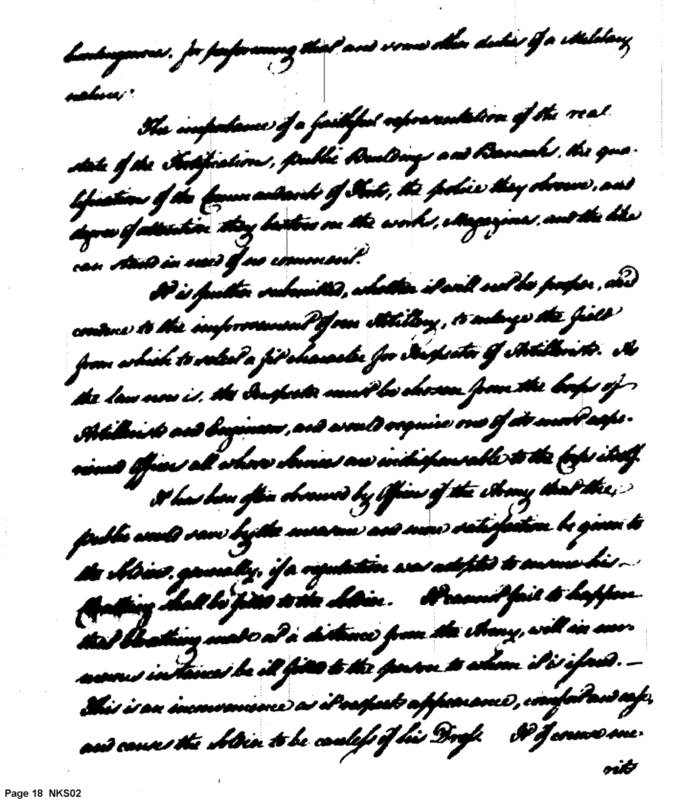
Contingencies, for performing that and various other duties of a [military?] nature.
The importance of a faithful representation of the real state of the Fortifications, public Buildings and Barracks, the qualifications of the Commandants of Posts, the police they observe, and degree of attention they bestow on the works, Magazines, and the like can stand in need of no comment.
It is further submitted, whether it will not be proper, and conducive to the improvement of our Artillery, to enlarge the field from which to select a fit character for Inspector of Artillerists. As the law now is, the Inspector must be chosen from the Corps of Artillerists and Engineers, and would require one of its most experienced Officers all whose services are indispensable to the Corps itself.
It has been often observed by Officers of the Army that the public could save by the measure and more satisfaction be given to the Soldiers generally, if a regulation was established to enumerate his [?] shall be given to the Soldier. It cannot fail to happen that Clothing made at a distance from the Army, will in countless instances be ill fitted to the person to whom it is issued. This is an inconvenience as it respects appearance, comfort and expence, and causes the Soldier to be careless of his Dress. It merits
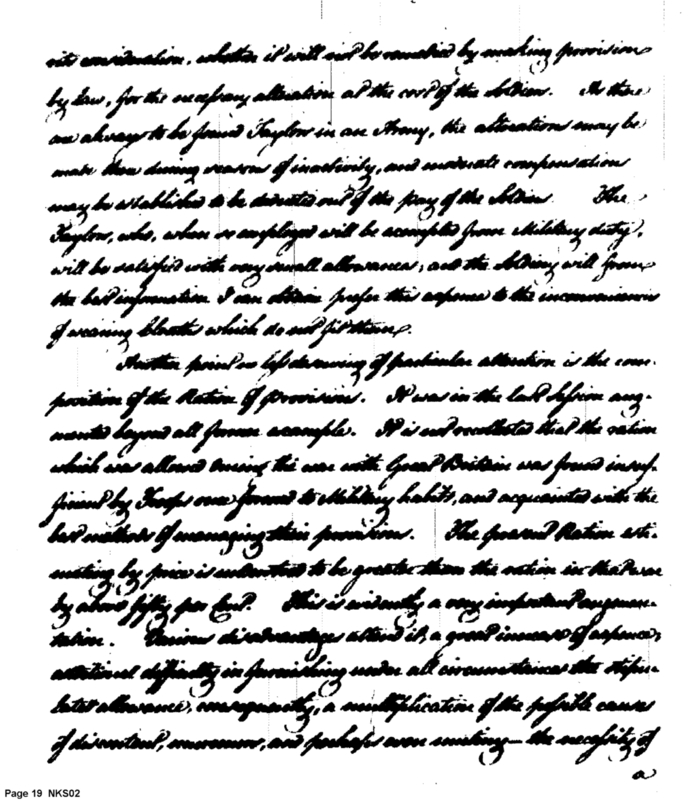
its consideration, whether it will not be remedied by making provision by law, for the necessary alteration at the cost of the Soldier. As there are always to be found Taylors in an Army, the alterations may be made there during seasons of inactivity, and moderate compensations may be established to be deducted out of the pay of the Soldier. The Taylors who, when so employed will be excused from Military duty, will be satisfied with very small allowances; and the Soldiers will form the best information I can obtain proposes this expense to the inconveniences of wearing Clothes which do not fit them.
Another point no less deserving of particular attention is the composition of the Ration of Provisions. It was in the last Session augmented beyond all former examples. It is well recollected that the ration which was allowed during the war with Great Britain was found insufficient by Troops once formed to Military habits, and acquainted with the bad methods of managing their provisions. The present Ration attaining by price is understood to be greater than this ration in that [?] by about fifty per Cent. This is evidently a very important augmentation. Various disadvantages attend it; a great increase of expense, additional difficulty in procuring under all circumstances the stipulated allowances, consequently a multiplication of the possible causes of discontents, murmurs, and perhaps even exciting the necessity of
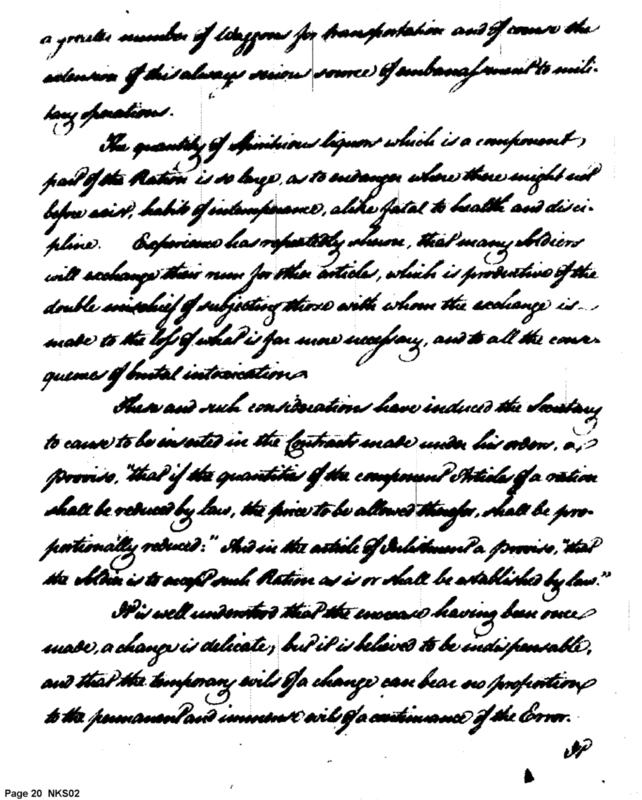
a greater number of Waggons for transportation and of course the extension of this always serious source of embarrassment to military operations.
The quantity of spirituous liquors which is a component part of the Ration is so large, as to endanger where there might and before exist, habits of intemperance, alike fatal to health and discipline. Experience has repeatedly shown, that many Soldiers will exchange their rum for other articles, which is productive of the double mischief of subjecting those with whom the exchange is made to the loss of what is far more necessary, and to all the consequences of brutal intoxication.
These and such considerations have induced the Secretary to cause to be inserted in the Contracts made under his orders, a proviso, "that if the quantities of the component Articles of a ration shall be reduced by law, the price to be allowed therefor, shall be proportionally reduced:" and in the article of Enlistment a proviso, "that the Soldier is to accept such Ration as is or shall be established by law."
It is well understood that the measure having been once made, a change is delicate; but it is believed to be indispensable, and that the temporary evils of a change can bear no proportion to the permanent and imminent evils of a continuance of the Error.
It may not perhaps be advisable to bring back the Ration to the Standard of the late War, but to modify it in some respects differently so as not materially to affect the aggregate agreeance.
For example, it may consist of eighteen ounces of Bread or Flour or an equivalent in rice, or Indian Meal where Flour cannot be obtained; one pound and a quarter of fresh Beef, or one pound of salted Beef, or three quarters of a pound of salted Pork; Salt, when fresh Meat is issued, at the rate of two quarts, and Candles, at the rate of a pound a month, half for every hundred Rations.
With regard to liquors, it may be best to exclude it from being a component part of the Ration, allowing a discretion to commanding Officers to serve it in quantities not exceeding half a gill per day, except on extraordinary occasions.
Vinegar also ought to be furnished, where to be had, at the rate of two quarts, and Soap at the rate of two pounds per hundred Rations; but this ought to depend on circumstances, and ought not to make a part of the established Ration.
There are often difficulties in furnishing articles of the latter description, and the equivalent in money is frequently rather pernicious than beneficial. Where there is a [fairer?] of the promise of such Articles is apt to prove more beneficial to the [undecipherable] than
to any other person. It is commonly so [managed?] that the substitute is not a real equivalent.
But it must not be remarked that whatever is to be done in this respect must be so conducted, as not to impair the conditions on which the old Troops now in service were enlisted.
The act which authorizes to raise the twelve Regiments of Infantry and six Troops of Dragoons, provides that they shall be kept in service during the continuance of the existing differences between the United States and the French Republic, if not sooner discharged. Upon the disbanding of these Troops, it is to be presumed by far the greatest number of both Officers and [Men?] will find themselves at a considerable distance from their home. The same thing also happens to Officers on the Establishment, where age or time of life, or scanty fortune does and [prevent?] of their continuance in the Army, as well as to [prevent?] serving on the Frontiers where engagements are successively expiring. These all have or will have to travel to their respective places of retirement at their own expense, if no provision is made by Congress to meet the case. This to many of them must be and is an extreme hardship; especially when it is considered, that the profession of Arms, however important to the Country
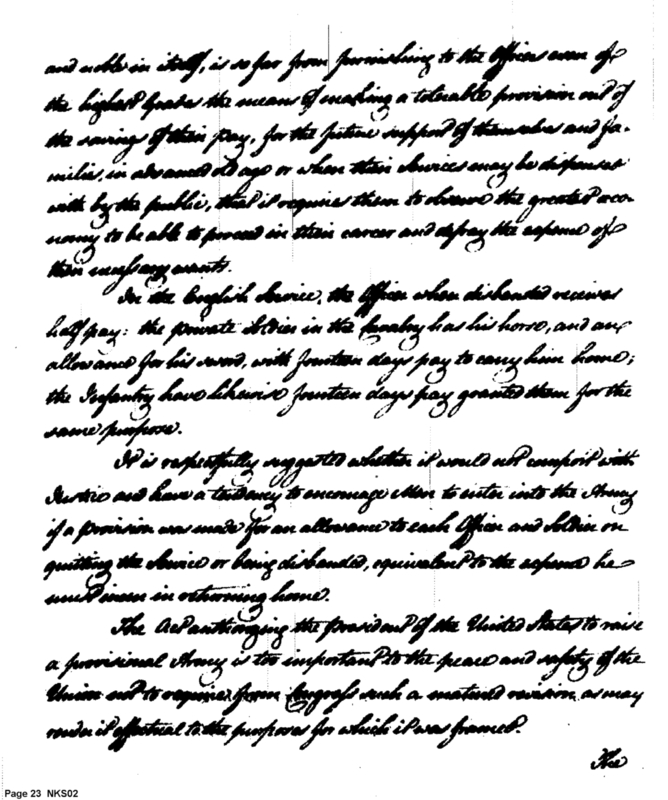
and noble in itself, is so far from furnishing to the Officers even of the highest Grade the means of making a tolerable provision out of the savings of their pay, for the future support of themselves and families, in advanced old age or when their Services may be dispensed with by the public; that it requires them to observe the greatest economy to be able to proceed in their career and defray the expense of their necessary events.
In the English service, the Officer when disbanded receives half pay; the private Soldier in the Infantry has his Horse, and any allowance for his return, with fourteen days pay to carry him home; the Infantry have likewise fourteen days pay granted them for the same purpose.
It is respectfully suggested whether it would not comport with Justice and have a tendency to encourage Men to enter into the Army, if a provision was made for an allowance to each Officer and Soldier on quitting the service or being disbanded, equivalent to the expenses he must incur in returning home.
The Act authorizing the President of the United States to raise a provisional Army is too important to the peace and safety of the Union and to requires from Congress such a material revision, as may render it effectual to the purposes for which it was framed.
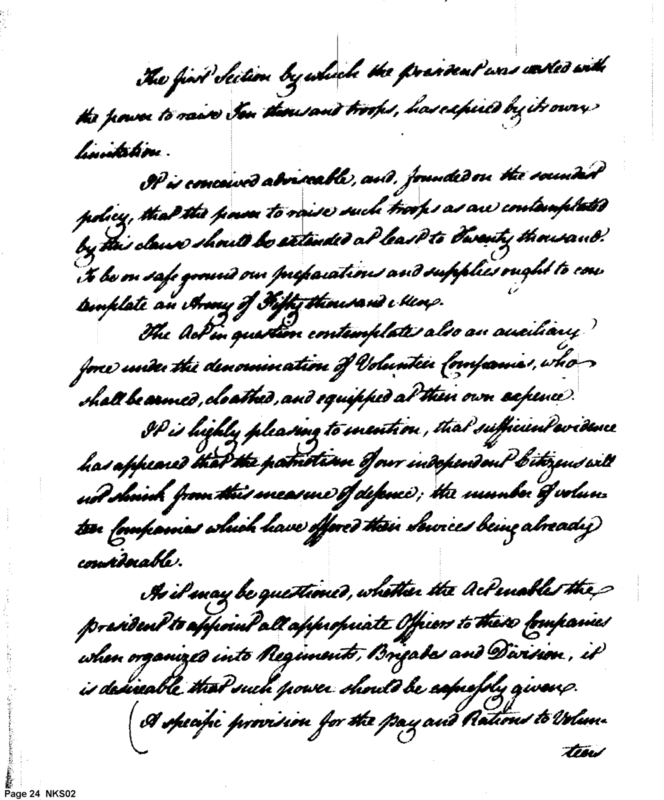
The first Section by which the President was vested with the power to raise Ten thousand troops, has expired by its own limitation.
It is conceived advisable, and, founded on the sound policy, that the power to raise such troops as are contemplated by this clause should be extended at least to Twenty thousand. To be on safe ground our preparations and supplies ought to contemplate an Army of Fifty thousand men.
The Act in question contemplates also an auxiliary force under the denomination of Volunteer Companies, who shall be armed, clothed, and equipped at their own expense.
It is highly pleasing to mention, that sufficient evidence has appeared that the patriotism of our independent Citizens will not shrink from this measure of defence; the number of Volunteer Companies which have offered their services being already considerable.
As it may be questioned, whether the Act enables the President to appoint all appropriate Officers to these Companies when organized into Regiments, Brigades and Divisions, it is desirable that such power should be expressly given.
(A specific provision for the pay and Rations to Volunteer
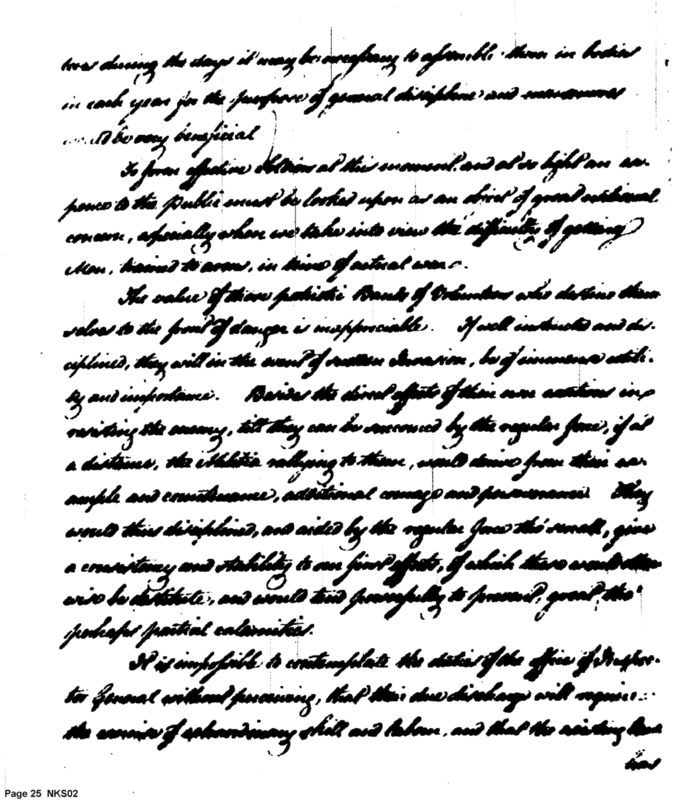
tees during the days it may be necessary to assemble them in bodies, in each year for the purposes of general discipline and maneuvers [undecipherable] to be very beneficial.
To form effective Soldiers at this moment and at as light an expense to the Public must be looked upon as an object of grand national concern, especially when we take into view the difficulty of getting Men, trained to arms, in times of actual war.
The value of these patriotic Bands of Volunteers who devote themselves to the front of danger is inappreciable. If well instructed and disciplined, they will in the event of serious invasion, be of immense utility and importance. Besides the direct effects of their own exertions in resisting the enemy, till they can be succoured by the regular forces, if at a distance, the Militia rallying to them, would draw from them ample and countenance, additional courage and perseverance. They would thus disciplined, and aided by the regular force their small, give a consistency and stability to our first efforts, of which there would otherwise arise to [difficulty?], and would tend powerfully to prevent, grant the perhaps political calamities.
It is impossible to contemplate the duties of the office of Inspector General without perceiving, that their due discharge will require the exercise of extraordinary skill and labour, and that the existing law
has assigned no compensation whatever for the exercise of this skill and labour.
In the case of Officers taken from the line to perform the specific duties of Assistant Inspectors, Quarter Masters [&c.] for [?] the law has made a specific allowance. The principle applies, and with augmented force, to the Inspector General, who has not only to create Regulations but to superintend their execution, in addition to his duties as a General Officer.
To discharge with effect the duties of his Office he must make frequent journies from one part of the Army to another, where it is encamped in different and distant places. It must be confessed that the expense of such journies must quickly eat out the narrow allowance of a Major General. If filled by a Man of talents without a fortune to meet such expenses, he must either compromise his reputation and that of the Government, by not producing the results to be expected from his department; or he must ruin himself in performing services for which there is no adequate compensation. The precedent of last [war?] establishes the propriety of an extra allowance for the extra services and expenses to this Office; and it would be infinitely more agreeable and less embarrassing to the department of War, that the latter in his
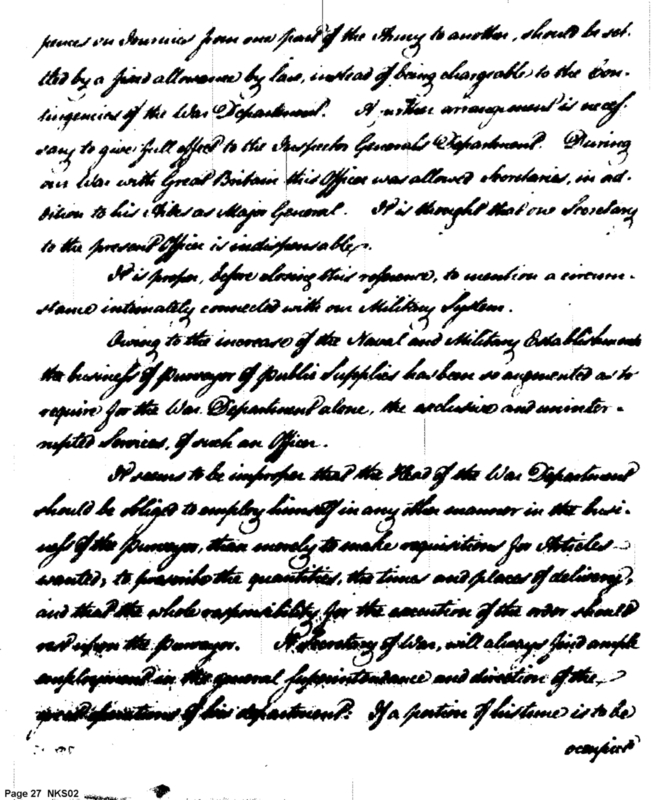
penses on Journies from one part of the Army to another, should be settled by a fixed allowance by law, instead of being chargeable to the Contingencies of the War Department. A further arrangement is necessary to give full effect to the Inspector General's Department. During our War with Great Britain this Office was allowed [Secretaries?], in addition to his Aides as Major General. It is thought that one Secretary to the present Office is indispensable.
It is proper, before closing this reference, to mention a circumstance intimately connected with our Military System.
Owing to the increase of the Naval and Military Establishments, the business of Purveyor of public Supplies has been so augmented as to require for the War Department alone, the exclusive and uninterrupted services, of such an Officer.
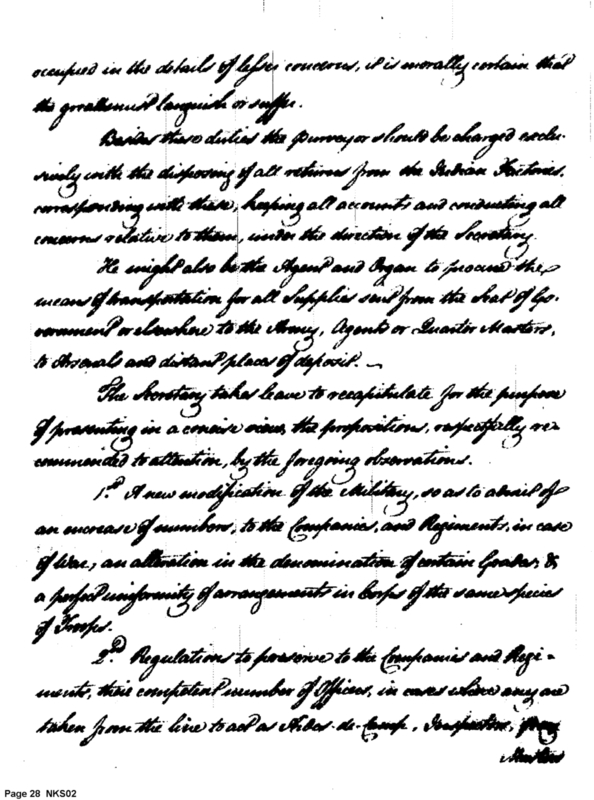
It seems to be improper that the Head of the War Department should be obliged to employ himself in any other manner in the business of the Purveyor, than merely to make requisitions for Articles wanted, to prescribe the quantities, the times and places of delivery, and that the whole responsibility for the execution of the orders should rest upon the Purveyor. A Secretary of War, will always find ample employment in the general superintendance and direction of the varied functions of his department. If a portion of his time is to be occupied
occupied in the details of lesser concerns, it is morally certain that the government languishes or suffers.
Besides these duties the Purveyor should be charged exclusively with the disposing of all returns from the Indian Factories, corresponding with these, keeping all accounts and conducting all concerns relative to them, under the direction of the Secretary.
He might also be the Agent and Organ to procure the means of transportation for all Supplies sent from the Seat of Government or elsewhere to the Army, Agents or Quarter Masters, to Arsenals and distant places of deposit.
The Secretary takes leave to recapitulate for the purpose of presenting in a concise view, the propositions, respectfully recommended to attention, by the foregoing observations.
1st. A new modification of the Military, so as to admit of an increase of numbers, to the Companies, and Regiments, in case of war; an alteration in the denomination of certain Grades, & a perfect uniformity of arrangements in Corps of the same species of Troops.
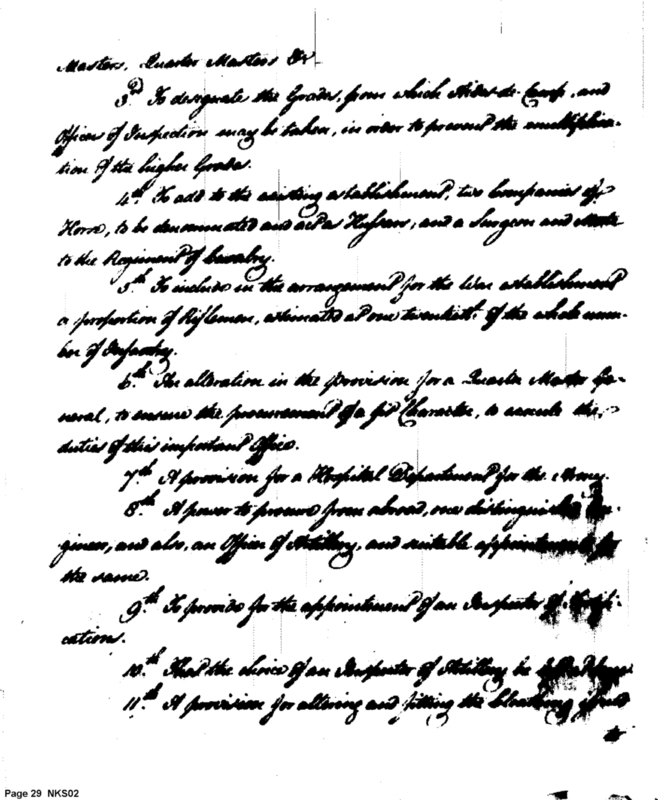
2d. Regulations to preserve to the Companies and Regiments, their competent number of Officers, in cases where any are taken from the line to act as Aides de Camp, Inspectors, [?] Masters
Masters, Quarter Masters &c.
3d. To designate the Grades, from which Aides de Camp, and Officers of Inspection may be taken, in order to prevent the multiplication of the higher Grades.
4th. To add to the existing establishment, two Companies of Horse, to be denominated and act as Hussars, and a Surgeon and [attached?] to the Regiment of Infantry.
5th. To include in the arrangement for the War establishment, a proportion of Riflemen, estimated at one twentieth of the whole number of Infantry.
6th. The alteration in the provision for a Quarter Master General, to assure the procurement of a fit Character, to execute the duties of this important Office.
7th. A provision for a Hospital Department for the Army.
8th. A power to procure from abroad, one distinguished Engineer, and also, an Officer of Artillery, and suitable appointments for the same.
9th. To provide for the appointment of an Inspector of Fortifications.
10th. That the service of an Inspector of Artillery be [continued?].
11th. A provision for altering and fitting the Clothing of [?]
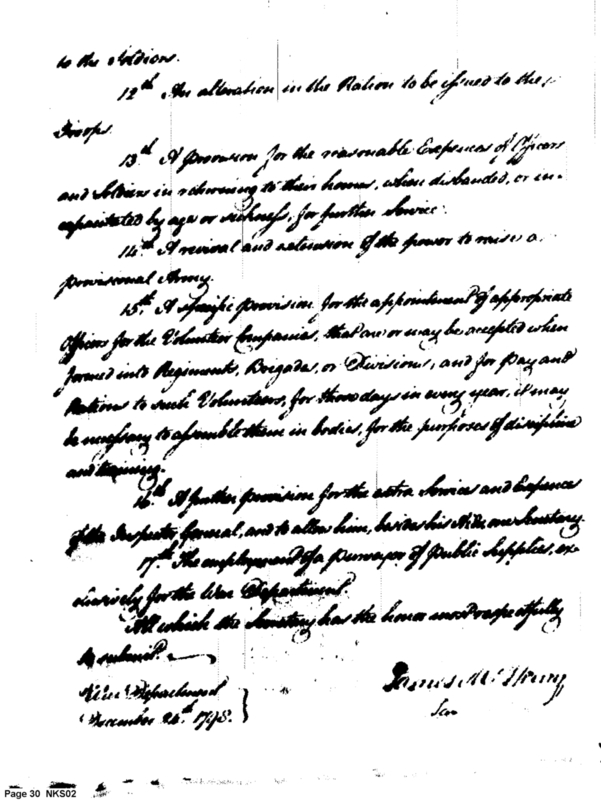
to the Soldiers.
12th. The alteration in the Ration to be issued to the Troops.
13th. A provision for the reasonable Expenses of Officers and Soldiers in returning to their homes, when disbanded, or incapacitated by age or sickness, for further service.
14th. A revival and extension of the power to raise a Provisional Army.
15th. A specific provision for the appointment of appropriate Officers for the Volunteer Companies, that are or may be accepted when formed into Regiments, Brigades, or Divisions, and for Pay and Rations to such Volunteers, for three days in every year, it may be necessary to assemble them in bodies, for the purposes of discipline and training.
16th. A further provision for the extra services and Expenses of the Inspector General, and to allow him, besides his Aides, one Secretary.
17th. The employment of a Purveyor of public Supplies, exclusively for the War Department.
All which the Secretary has the honor most respectfully to submit.
War Department James McHenry
December 26th 1798. Secr
A
A Regiment of Infantry
Present establishment Proposed establishment
1 Lieut. Col. Commandant 1 Colonel
2 Majors 2 Majors
1 Adjutant )to be taken 1 Adjutant )to be lieutenants and
1 Paymaster ) from the line 1 Paymaster (in addition to the
1 Quarter Master) 1 Quarter Master)Lieutenants herein
1 Surgeons 1 Surgeon after mentioned
2 Surgeons Mates 2 Surgeons Mates
10 Captains 10 Captains
10 Lieutenants 10 First Lieutenants
10 Ensigns 10 Second Lieutenants
1 Sergeant Major 2 Cadets
1 Quarter Master Sergeant 2 Sergeant Majors
2 Senior Musicians 2 Quarter Master Sergeants
40 Sergeants 2 Senior Musicians
40 Corporals 20 Musicians
20 Musicians 40 Sergeants
600 Privates 40 Corporals
920 Privates
Regiment of Dragoons
Present establishment Proposed establishment
1 Lieutenant Colonel Commandant 1 Colonel
2 Majors 2 Majors
1 Adjutant )to be taken 1 Adjutant )to be lieutenants and
1 Paymaster ) from 1 Quarter Master (in addition to the
1 Quarter Master) the line 1 Paymaster )Lieutenants after
No Surgeons )provided by law mentioned
Mate ) 1 Surgeon
8 Captains 2 Surgeons Mates
16 Lieutenants 10 Captains
8 Cornets 10 First Lieutenants
1 Sergeant Major 10 Second Lieutenants
1 Quarter Master Sergeant 5 Cadets
32 Sergeants 2 Sergeant Majors
32 Corporals 2 Quarter Master Sergeants
8 Farriers 2 Chief Musicians
8 Saddlers 40 Sergeants
8 Trumpeters 40 Corporals
416 Dragoons 10 Musicians
10 Saddlers
10 Blacksmiths
10 Bootmakers
890 Privates
A Regiment of Artillery
Present establishment of First Regiment Proposed establishment
1 Lieut. Col. Commandant 1 Colonel
4 Majors 4 Majors
1 Adjutant )to be taken 1 Adjutant )to be lieutenants and
4 Adjutants and Paymasters) from the line 1 Quarter Master (in addition to the
1 Surgeon 1 Paymaster )Lieutenants herein
4 Surgeons Mates 4 Surgeon after mentioned
16 Captains 2 Surgeons Mates
32 Lieutenants 16 Captains
32 Cadets 16 First Lieutenants
64 Sergeants 16 Second Lieutenants
64 Corporals 32 Cadets
32 Musicians 4 Sergeant Majors
160 Artificers 4 Quarter Master Sergeants
672 Privates 64 Sergeants
64 Corporals
1 Senior Musician
10 Musicians
128 Artificers
768 Privates
Type
Document
Description
Message of the President with a report of the Secretary of War relative to military establishments.
Date
12/24/1798
Author
Recipient
Sent from
War Department
Document number
1798122400301
Page start
5
Note
Enclosed in President Adams' Message dated 12/31/1798.
Mostly illegible.
Notable persons
John Adams
James McHenry
infantry
Notable locations
War Department
Notable items
rule
governance
law
guidelines