No human transcription currently available for this document.
I have enough of the primary document from pages 3–7. Pages 1, 2, and 8 are metadata placeholders; pages 9+ are duplicate copies. Let me now output the transcription.
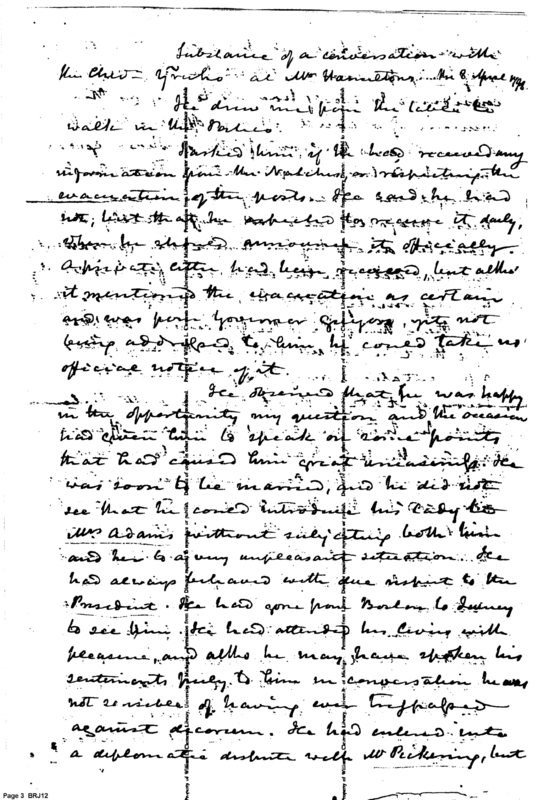
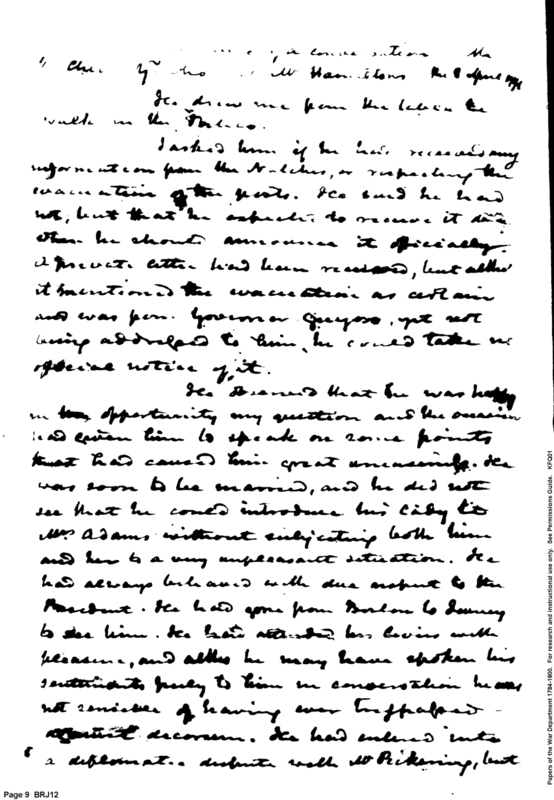
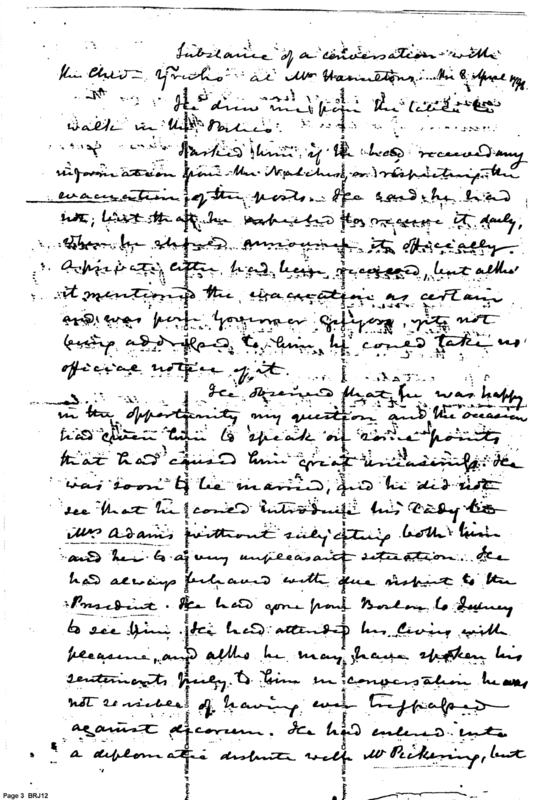
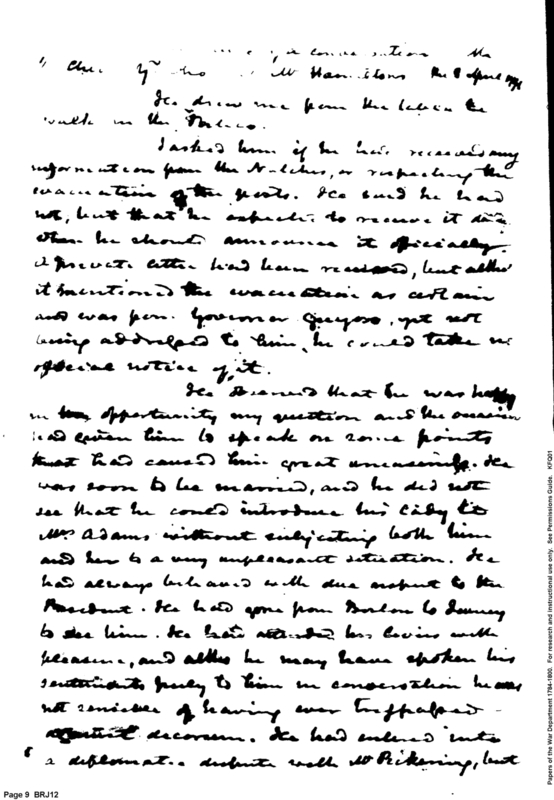
Substance of a conversation with Mr Chur: Yruijo at Mr Hamiltons. the 8 April 1798.
He drew me from the [undecipherable: probable reading "latter"] he walk in the Parlico.
I asked him if he had received any information from Mr [undecipherable: probable reading "Natchez"], or respecting the evacuation of the posts. He said he had not; but that he expected to receive it daily, when he should announce it officially. A private letter had been received, but altho it mentioned the evacuation as certain and was from Governor [undecipherable: probable reading "Gayoso"], yet not being addressed to him, he could take no official notice of it.
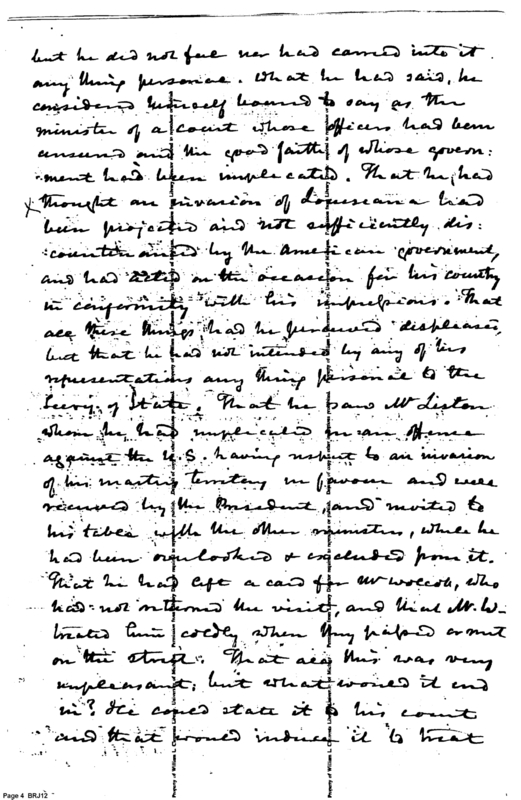
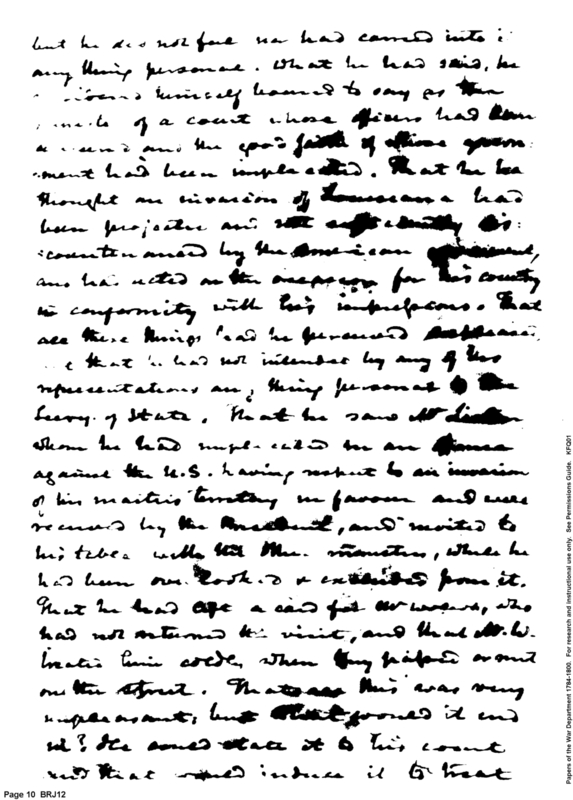
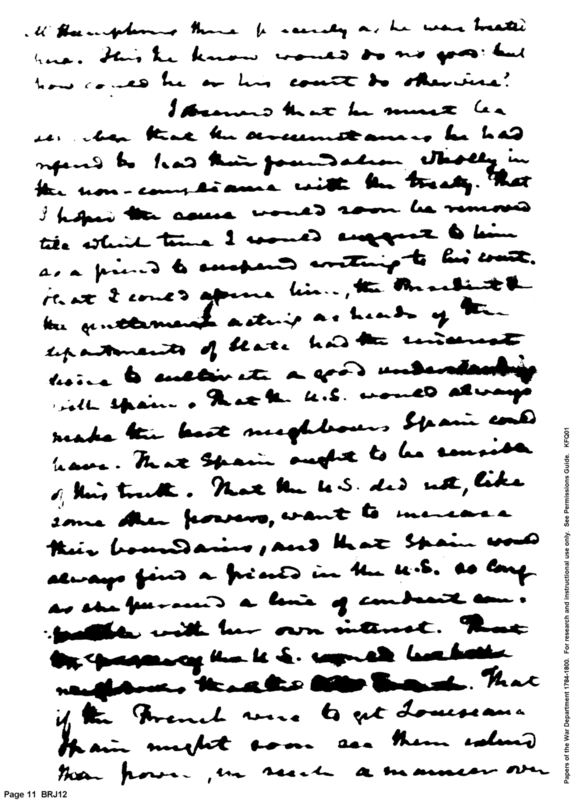
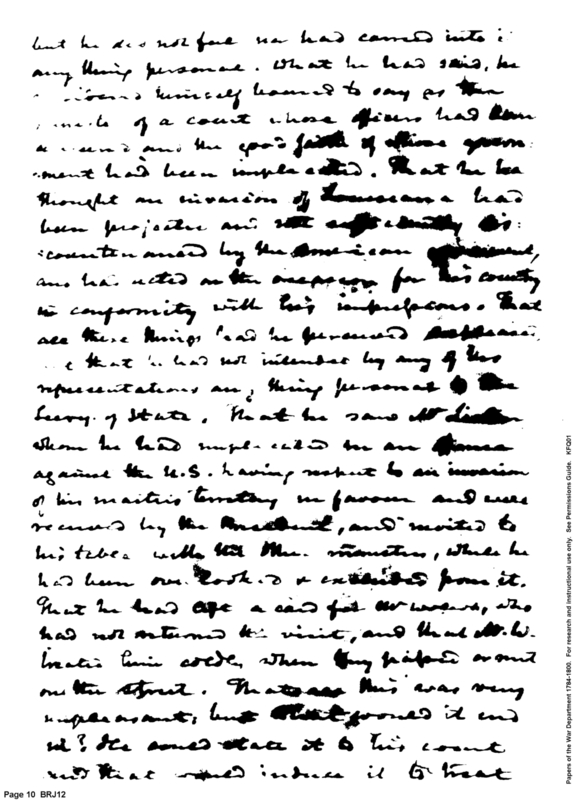
He observed that he was happy in the opportunity my question and the occasion had given him to speak on some points that had caused him great uneasiness. He was soon to be married, and he did not see that he could introduce his lady to Mrs Adams without subjecting both him and her to a very unpleasant situation. He had always behaved with due respect to the President. He had gone from Boston to [undecipherable: probable reading "Quincy"] to see him. He had attended his Levies with pleasure, and altho he may have spoken his sentiments freely to him in conversation he was not sensible of having ever trespassed against decorum. He had entered into a diplomatic dispute with Mr Pickering, but he did not feel he had carried into it any thing personal. What he had said, he considered himself bound to say as the minister of a court whose officers had been censured and the good faith of whose government had been implicated. That he had thought an invasion of Louisiana had been projected and not sufficiently discountenanced by the American government, and had acted on the occasion for his country in conformity with his impressions. That all these things had he [undecipherable] displeasure, but that he had not intended by any of his representations any thing personal to the Secy of State. That he saw Mr Liston whom he had implicated in an offence against the U.S. having respect to an invasion of his master's territory in favour and were received by the President, and invited to his tables with the other ministers, while he had been overlooked & excluded from it. That he had left a card for Mr Wolcott, who had not returned the visit, and that Mr W. treated him coldly when they passed or met on the street. That all this was very unpleasant; but what would it end in? He could state it to his court and that would induce it to treat Mr Humphreys there precisely as he was treated here. This he knew would do no good; but how could he or his court do otherwise?
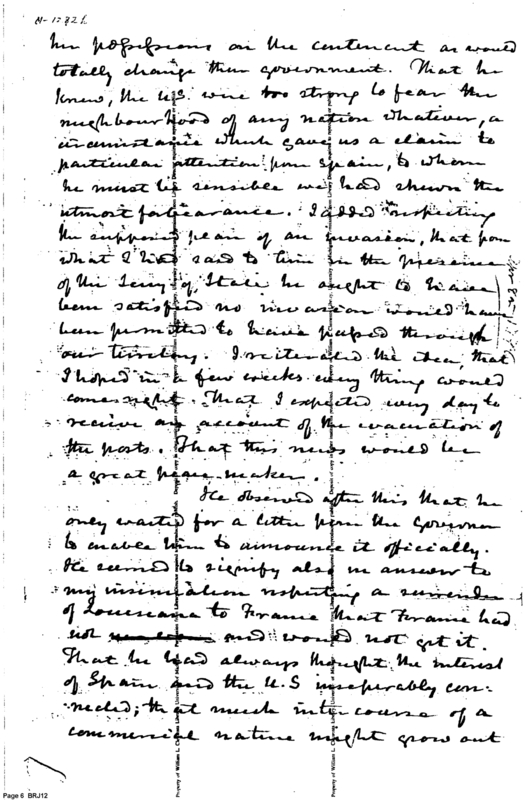
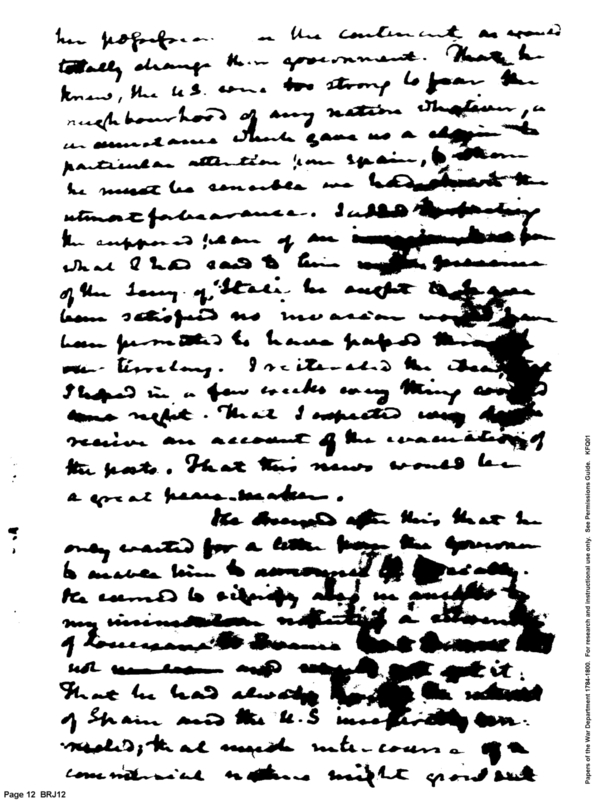
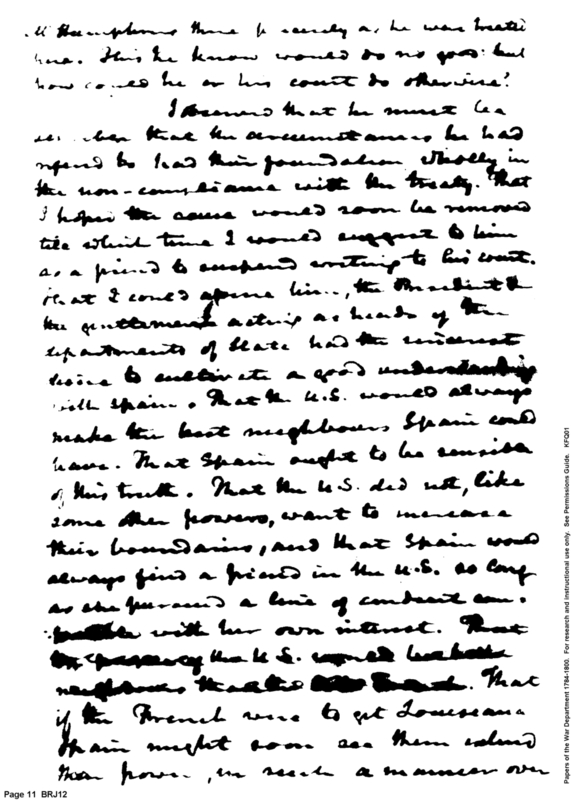
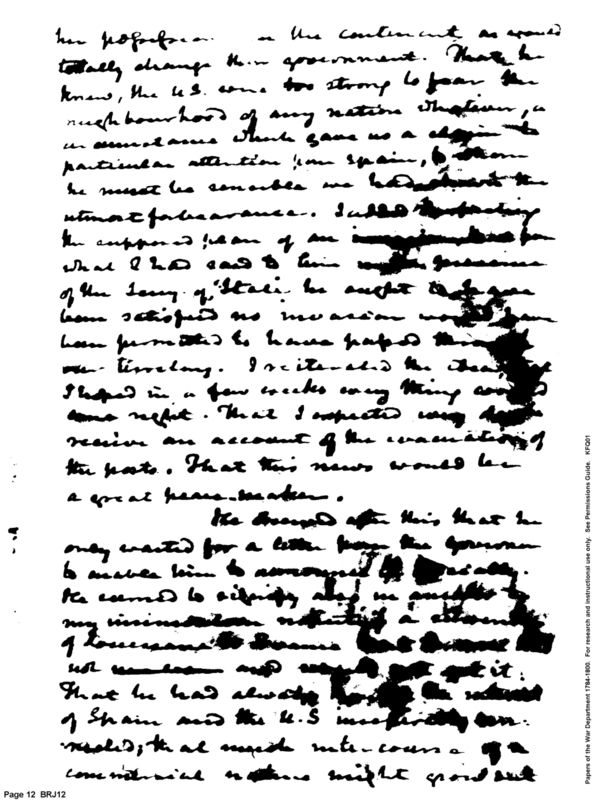
I observed that he must be sensible that the circumstances he had referred to had their foundation wholly in the non-compliance with the treaty. That I hoped the cause would soon be removed, the which time I would suggest to him as a friend to suspend writing to his court. That I could assure him, the President & the gentlemen acting as heads of the departments of State had the sincerest desire to cultivate a good understanding with Spain. That the U.S. would always make the best neighbours Spain could have. That Spain ought to be sensible of this truth. That the U.S. did not, like some other powers, want to increase their boundaries, and that Spain would always find a friend in the U.S. so long as she pursued a line of conduct compatible with her own interest. That the prosperity the U.S. would [undecipherable] better neighbours than the [undecipherable]. That if the French were to get Louisiana Spain might soon see them extend their power, in such a manner over her possessions on the continent as would totally change their government. That he knew, the U.S. were too strong to fear the neighbourhood of any nation whatever, a circumstance which gave us a claim to particular attention from Spain, to whom he must be sensible we had shown the utmost forbearance. I added respecting the supposed plan of an invasion, that from what I had said to him in the presence of the Secy of State, he ought to have been satisfied no invasion would have been permitted to have passed through our territory. I reiterated the idea, that I hoped in a few weeks every thing would come right. That I expected every day to receive an account of the evacuation of the posts. That this news would be a great peace-maker.
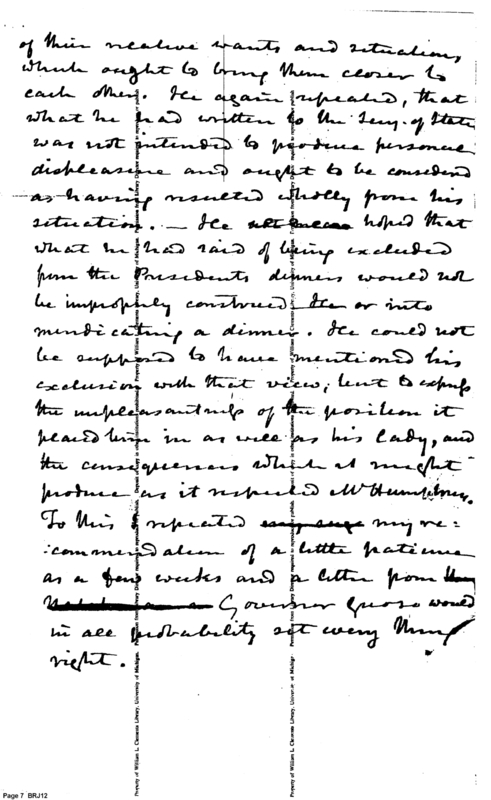
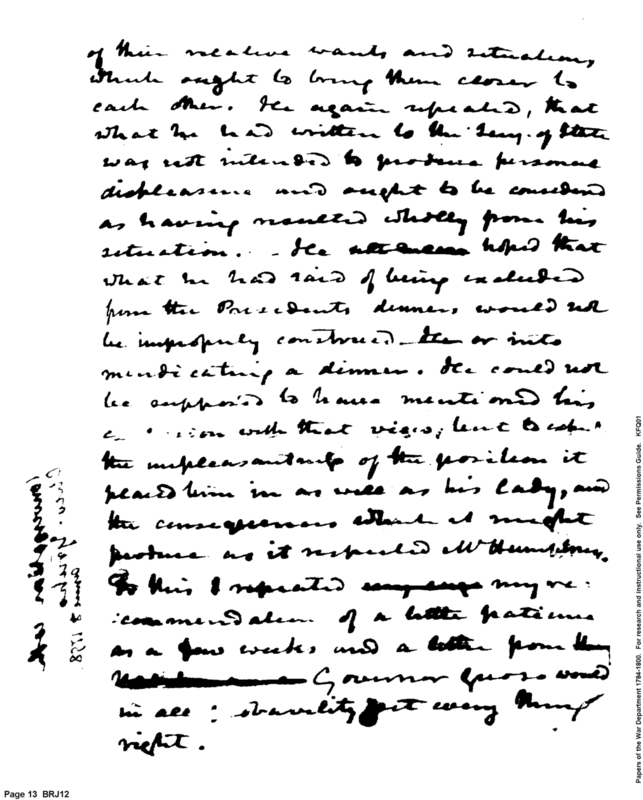
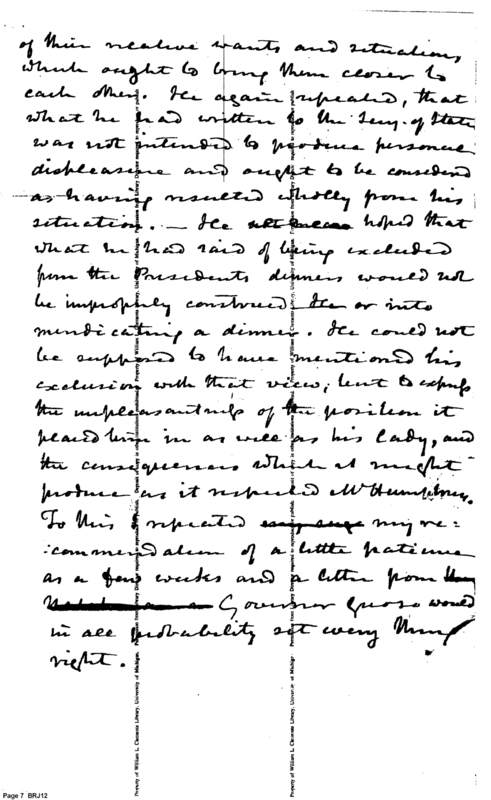
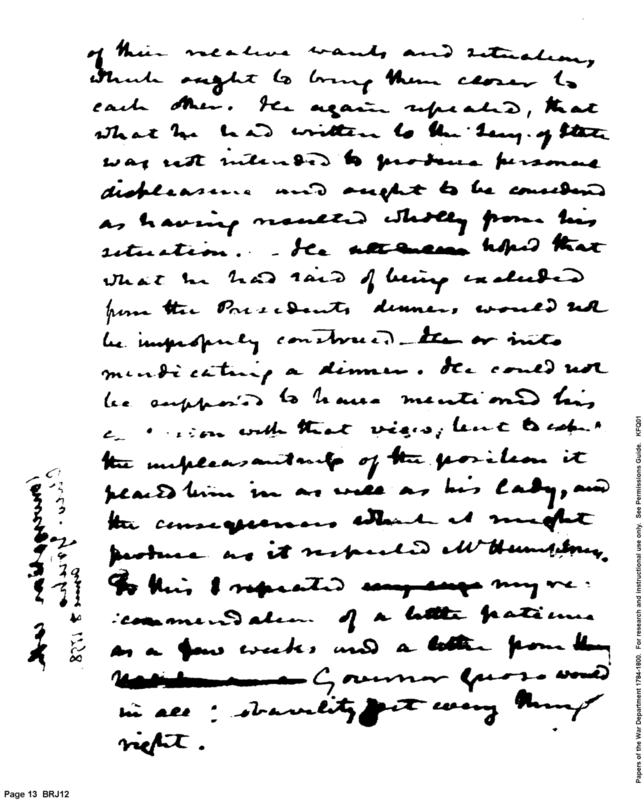
He observed after this that he only waited for a letter from the Governor to enable him to announce it officially. He seemed to signify also in answer to my insinuation respecting a surrender of Louisiana to France that France had not received and would not get it. That he had always thought the interest of Spain and the U.S. inseparably connected; that much intercourse of a commercial nature might grow out of their relative wants and situations, which ought to bring them closer to each other. He again repeated, that what he had written to the Secy of State was not intended to produce personal displeasure and ought to be considered as having resulted wholly from his situation. He [undecipherable] hoped that what he had said of being excluded from the Presidents dinners would not be improperly construed him or into mendicating a dinner. He could not be supposed to have mentioned his exclusion with that view, but to express the unpleasantness of the position it placed him in as well as his lady, and the consequences which it might produce as it respected Mr Humphreys. To this he repeated [undecipherable] my recommendation of a little patience as a few weeks and a letter from [the] [undecipherable: probable reading "Natchez"] Governor [undecipherable] would in all probability set every thing right.