

Should Evidence of Treason be Made Public?
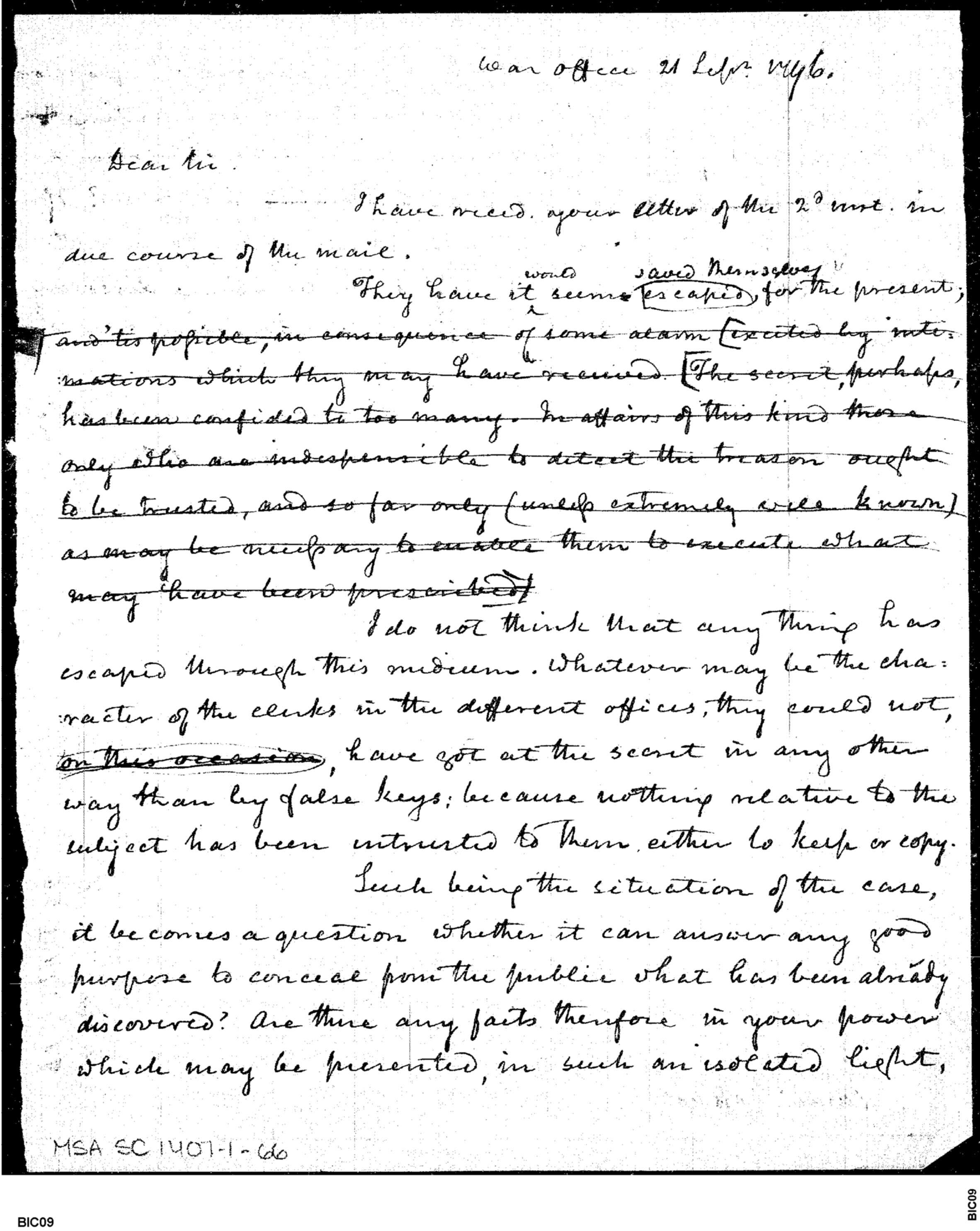
Document 1796McHenry believes that the secret did not escape from his office since none of the clerks could have obtained the secret except by way of false keys. Nothing related to the subject has been entrusted to them to either keep or copy. Such being the case, is there any purpose in concealing from the public what has already been discovered?
No human transcription currently available for this document.
This transcription was generated by machine using Anthropic's Claude Code (model sonnet 4.6). It may contain errors or inaccuracies. Please verify against the document image. Learn more about our generative AI methodology.
War Office 21 Sept. 1796.
Dear Sir.
I have recd. your letter of the 2d inst. in due course of the mail.
They have it seems would saved themselves [strikethrough: escaped] for the present; and 'tis possible, in consequence of some alarm [excited by inte-mations which they may have received. [The secret, perhaps, has been confided to too many. In affairs of this kind those only [underline: who are indispensable to detect the treason ought to be trusted, and so far only (unless extremely well known)] as may be necessary to enable them to execute what may have been prescribed.]
I do not think that any thing has escaped through this medium. Whatever may be the cha-racter of the clerks in the different offices, they could not, [strikethrough: on this occasion], have got at the secret in any other way than by false keys; because nothing relative to the subject has been entrusted to them either to keep or copy.
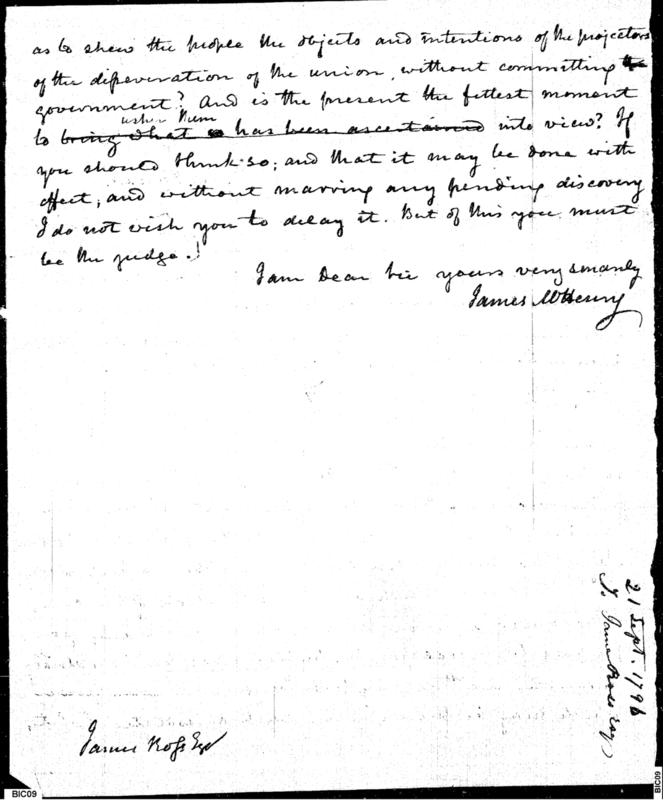
Such being the situation of the case, it becomes a question whether it can answer any good purpose to conceal from the public what has been already discovered? Are there any facts therefore in your power which may be presented, in such an isolated light, as to shew the people the objects and intentions of the projectors of the [undecipherable: probable reading disseveration] of the union, without committing the government? And is the present the fittest moment to bring [strikethrough: that [undecipherable] has been ascertained] when Num into view? If you should think so; and that it may be done with effect; and without marring any pending discovery I do not wish you to delay it. But of this you must be the judge.!
I am Dear Sir yours very sincerely
James McHenry
[21 Sept. 1796 / J. McHenry]
James Ross Esq
Type
Draft Letter Signed
Description
McHenry believes that the secret did not escape from his office since none of the clerks could have obtained the secret except by way of false keys. Nothing related to the subject has been entrusted to them to either keep or copy. Such being the case, is there any purpose in concealing from the public what has already been discovered?
Date
09/21/1796
Author
Recipient
Sent from
War Office
Repository
Document number
1796092100001
Page start
1
Notable persons
James Ross
James McHenry
clerks
Notable locations
War Office
Notable items
escaped
alarm
treason
secret
false keys
character of the clerks
facts